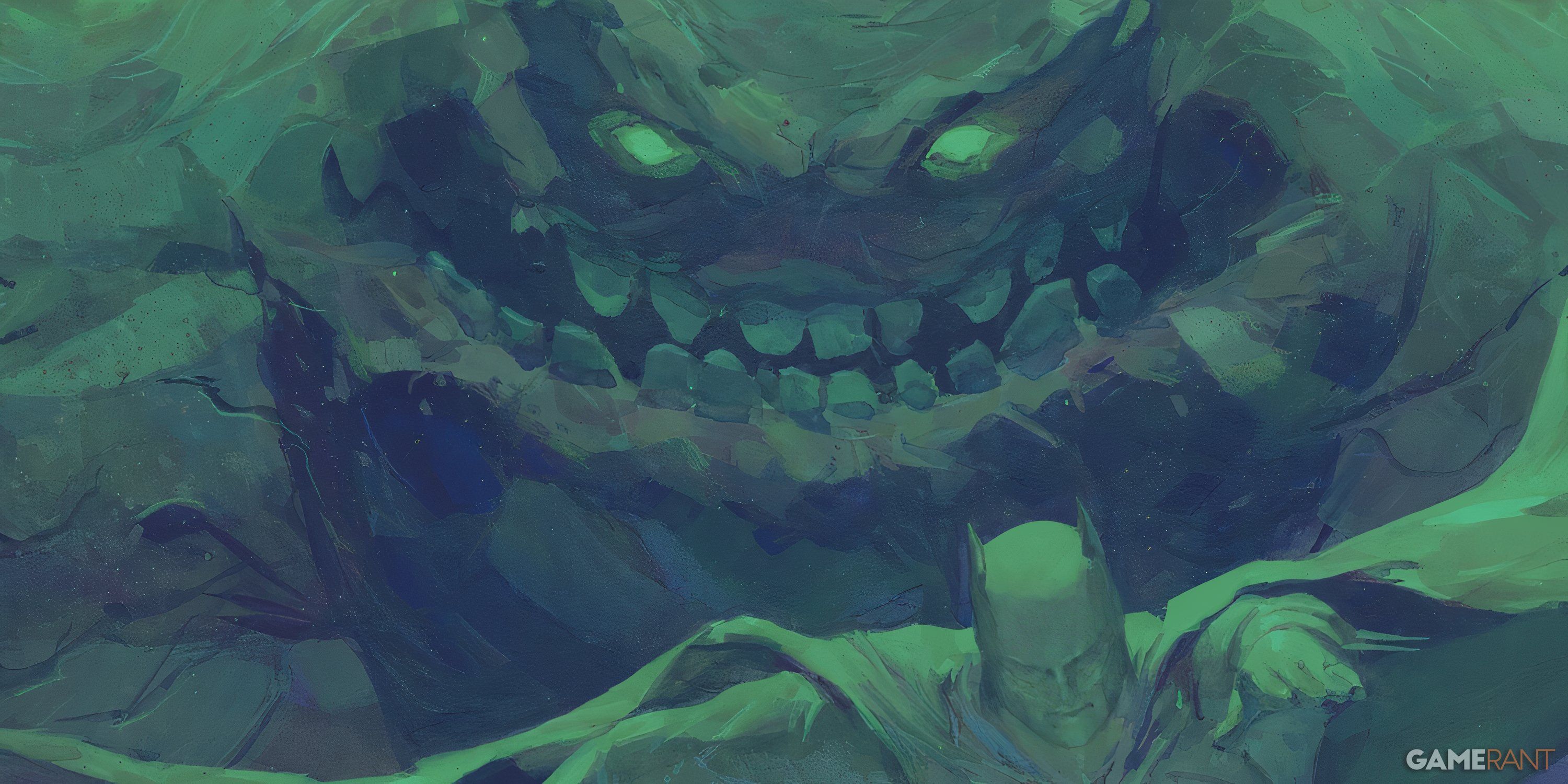
The trailer for the upcoming Clayface feature signals more than a creative departure; it represents a fundamental re-engineering of the DC Studios production pipeline under the James Gunn/Peter Safran era. By positioning a legacy antagonist as the center of a "proper" horror entry, the studio is moving away from the "superhero-adjacent" horror seen in Brightburn or Swamp Thing (1982) and toward a genre-first methodology. This shift addresses a historical inefficiency in the DC Extended Universe (DCEU): the inability to capture high-margin, lower-budget audiences while maintaining brand prestige.
The Architecture of Body Horror as Market Differentiation
The Clayface trailer reveals a commitment to the "Body Horror" sub-genre, a move that functions as a structural moat against the fatigue currently impacting traditional action-oriented comic book films. The footage emphasizes the kinetic instability of Basil Karlo’s cellular structure, utilizing practical effects over saturated CGI to evoke visceral discomfort. This is not merely an aesthetic choice; it is a risk-mitigation strategy.
The Three Pillars of the Clayface Rebrand
- Biological Volatility: Unlike previous iterations where Clayface’s abilities were treated as a superpower, this trailer frames them as a degenerative terminal illness. The protagonist is not gaining power; he is losing structural integrity.
- The Actor’s Psychosis: By grounding the narrative in Basil Karlo’s background as a failed actor, the film utilizes the "Thespian Madness" trope. This creates a psychological layer that justifies the non-linear, disorienting editing style shown in the teaser.
- Isolationist Worldbuilding: The footage suggests a contained environment. By limiting the scope to a specific urban infection point rather than a city-wide threat, the studio optimizes the production's "Cost-per-Scream" ratio, ensuring higher returns on a likely mid-tier budget.
The Cost Function of DC’s Horror Expansion
Historically, big-budget superhero films operate on a $200M+ entry fee, requiring a $600M+ global box office just to achieve parity. Horror, conversely, thrives on the $15M to $45M budget range. The Clayface project serves as a pilot for the "Elseworlds" or "DCU-Contained" sub-labels, testing if the brand can sustain profitable returns without the safety net of the Justice League's iconography.
The mechanism at work here is Brand Extension via Genre Verticalization. Instead of trying to make a "Superhero movie with scary parts," the production team is making a "Horror movie with a DC character." This distinction is critical for attracting the core horror demographic—a group that traditionally displays higher brand loyalty and repeat-viewing habits than the general blockbuster audience.
Analyzing the 'Proper Horror' Designation
The marketing claim that this is the first "proper" horror movie from DC Studios requires a rigorous definition of terms. Previous attempts, such as the Trench sequence in Aquaman (2018), functioned as genre-flashes—momentary deviations within a standard hero's journey. Clayface appears to be a structural horror narrative, defined by:
- Fixed Antagonism: The threat is internal and irreversible.
- Atmospheric Oppression: The use of low-key lighting and high-contrast shadows (Chiaroscuro) to mask the character's form, building dread rather than spectacle.
- The Absence of a Savior: Notably absent from the trailer is any mention of Batman or Gotham’s law enforcement. This isolation is a prerequisite for effective horror, as it removes the "Deus Ex Machina" safety net that often neuters tension in superhero narratives.
Technical Execution and Visual Logic
The trailer utilizes a specific color palette—dominated by sepia, ochre, and deep blacks—to mimic the texture of drying clay and decaying organic matter. This visual consistency suggests a high level of directorial intentionality. From a technical standpoint, the film seems to be leveraging a hybrid of animatronics and digital augmentation.
The Biological Mechanism of the Clayface Virus
While the trailer is light on scientific exposition, the visual cues suggest a fungal or cellular breakdown. The "Clay" is not mud; it is a hyper-proliferative mass of undifferentiated cells. By framing the transformation as a biological catastrophe, the film avoids the "magical" pitfalls that often distance audiences from the stakes. The horror stems from the Uncanny Valley effect: the moment when the audience recognizes something human in the mid-shift mass.
Market Implications for the DCU Roadmap
The success of Clayface will dictate the viability of the "Justice League Dark" corner of the DC Universe. If the film achieves a high ROI (Return on Investment), we can expect a rapid industrialization of this model across other properties like Etrigan or Deadman.
The bottleneck for this strategy is Tone Consistency. If the film leans too hard into the "superhero" tropes during the third act—standardized fight scenes, glowing energy beams, or world-ending stakes—it will alienate the horror purists. The trailer suggests a commitment to a bleak, character-focused resolution, which would be a significant departure from the established genre formula.
Strategic Forecast: The Shift to Mid-Budget Dominance
The release of the Clayface trailer marks the end of the "All or Nothing" era for DC Studios. By diversifying into genre-specific silos, the studio is building a more resilient portfolio.
The move to horror is a calculated exploitation of a market gap. While Marvel has experimented with horror elements (e.g., Doctor Strange in the Multiverse of Madness), they have yet to commit to an R-rated, psychologically grounded horror feature. DC is seizing the "High-Art Horror" space, aiming for the prestige associated with A24 or Blumhouse, but with the built-in recognition of the DC library.
The strategic play here is clear: utilize the Clayface IP to capture the 18-35 horror demographic, prove the viability of R-rated standalone features, and reduce the studio's reliance on $200M CGI spectacles. The success of this film will not be measured by whether it hits a billion dollars, but by its ability to achieve a 4x or 5x multiplier on a controlled budget, thereby providing the cash flow necessary to fund the broader DCU's more ambitious, high-risk endeavors.