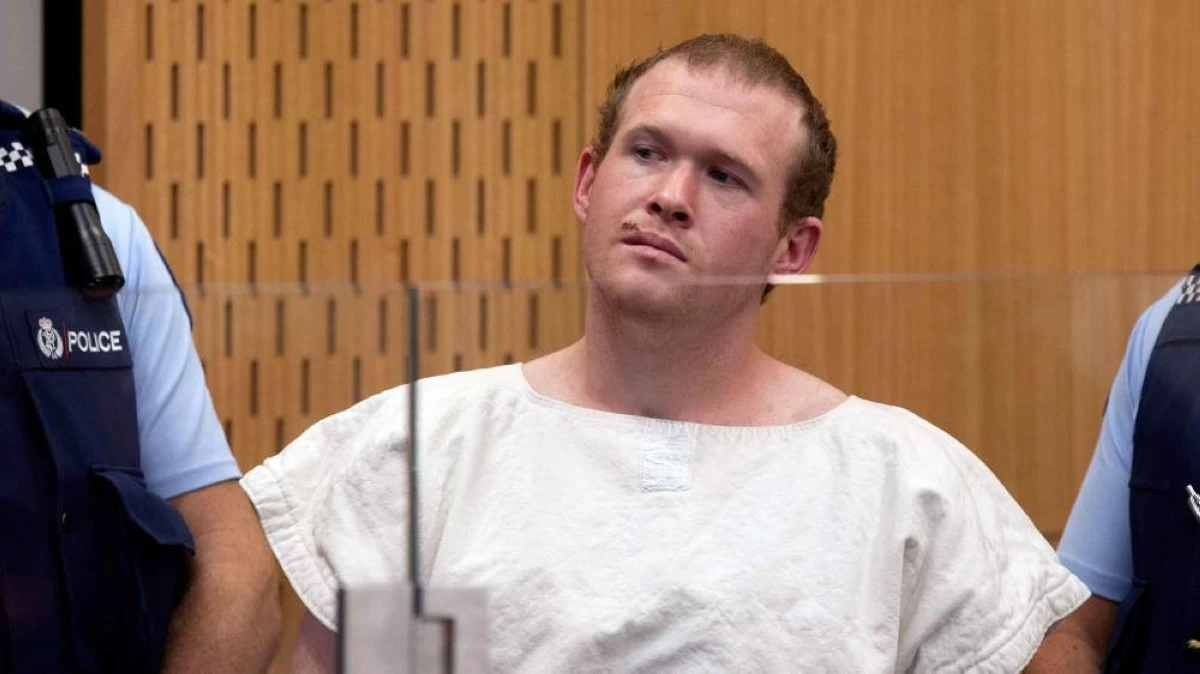
New Zealand’s highest court has slammed the door shut on Brenton Tarrant’s attempt to appeal his life sentence and guilty pleas. The ruling from the Supreme Court in Wellington effectively ends a desperate legal maneuver by the perpetrator of the 2019 mosque attacks to re-litigate a case that the nation had hoped was settled. By dismissing the application, the judiciary has not only upheld the integrity of the original sentencing but has also reinforced a fundamental principle of the legal system: a confession made with full legal advice and clear intent cannot be discarded simply because a prisoner has a change of heart years later.
This was never just about a legal technicality. It was a calculated attempt to drag the survivors and the families of the 51 victims back into the spotlight of a trial. The gunman argued that his guilty pleas were the result of "duress" and "unfair" conditions during his time in pre-trial remand. However, the court found no evidence to support the claim that his will was overborne or that the judicial process had failed him. Instead, the justices viewed the application as an abuse of the court's time and a hollow attempt to regain a platform for a hateful ideology. Expanding on this theme, you can also read: The Erasure of the Voting Rights Act and the New Architecture of American Power.
The Myth of Coerced Guilt
The core of the gunman's argument rested on the idea that his conditions at Auckland Prison—often referred to as Paremoremo—were so restrictive that he was forced to plead guilty just to end the isolation. He claimed that his lack of access to information and the pressure of his legal circumstances made a fair trial impossible. It is a classic tactic used by high-profile defendants who, after the adrenaline of the event fades and the reality of a life behind bars sets in, seek to find a loophole in the very system they once ignored.
Legal experts and the court itself noted that at the time of his plea in March 2020, Tarrant was represented by competent counsel. He had been through multiple hearings. He sat in a courtroom and admitted to 51 counts of murder, 40 counts of attempted murder, and one count of engaging in a terrorist act. The Supreme Court highlighted that there was a clear "factual basis" for the pleas. This wasn't a case of a confused individual being led into a confession; it was a mass murderer admitting to crimes he had meticulously documented and livestreamed himself. Experts at Associated Press have also weighed in on this trend.
The "duress" claim falls apart when scrutinized against the timeline of the 2020 proceedings. If a defendant is being coerced, that coercion usually manifests during the process, not years after the sentence is handed down. To allow a reversal now would set a dangerous precedent, suggesting that any prisoner in a maximum-security facility could claim their environment "forced" them to admit guilt.
Judicial Finality and the Weight of Life Without Parole
New Zealand’s legal history was changed forever when Justice Cameron Mander sentenced the gunman to life imprisonment without the possibility of parole. It was the first time such a sentence had ever been imposed in the country. The weight of that sentence is what the gunman is truly fighting. Life without parole is a terminal sentence; it means the individual will die in a New Zealand prison.
The Supreme Court’s refusal to hear the appeal confirms that this sentence was not an emotional overreaction by the lower courts, but a measured response to an unprecedented crime. The gunman’s attempt to appeal the sentence itself was tied to his attempt to withdraw the pleas. By rejecting the appeal against the conviction, the court effectively anchored the sentence. There is no legal path remaining for him to argue that the punishment is "manifestly excessive" when the crime involved the systematic execution of worshippers in their place of peace.
The Strategy of Distraction
We have seen this pattern before in international extremism cases. Figures like Anders Breivik in Norway have attempted to use the courtroom as a stage to continue their "war" against the state. By filing appeals, requesting changes in prison conditions, and claiming human rights violations, these individuals stay in the news cycle. They force the state to spend millions on legal fees and security. They force the victims to hear their names again.
The New Zealand judiciary showed a sophisticated understanding of this dynamic. By dismissing the application without a full hearing, they denied the gunman the oxygen of a public forum. The ruling was concise and focused strictly on the lack of legal merit in the "duress" argument. It signaled that the court would not be a tool for a perpetrator’s desire for relevance.
The "why" behind this appeal isn't found in a law book. It is found in the psychology of a person who lost his audience the moment the prison doors locked. Re-litigating the guilty plea was a way to force the world to look at him again. The court chose to look at the law instead.
The Cost of the Legal Long Game
While the Supreme Court has ended this specific chapter, the case highlights the massive resources required to manage a high-security prisoner of this caliber. Since 2019, the cost of the gunman's incarceration and the subsequent legal filings has been a point of quiet contention within the New Zealand government. Every "frivolous" filing requires a response from the Crown Law Office. Every transfer or court appearance requires a massive police and tactical presence.
There is a tension between the right to a fair legal process—which even a terrorist is afforded in a democracy—and the protection of the community from further trauma. The Supreme Court balanced this by allowing the application to be filed but dismissing it once it was clear it lacked any "arguable case." This is the system working as intended. It provides a vent for the legal process but shuts off the flow when it becomes an exercise in futility.
The Victim Impact Factor
For the Al Noor and Linwood mosque communities, this ruling provides a measure of exhausted relief. The threat of a trial meant the threat of having to testify, of having to see the footage again, and of having to see the gunman face-to-face. A trial would have taken months and would have been a global media circus.
The Supreme Court's decision protects the finality of the 2020 sentencing. It ensures that the focus remains on the recovery of the community rather than the grievances of the perpetrator. In New Zealand law, the interests of justice include the interests of the victims to have a case resolved. The "guilty" status remains, and with it, the legal acknowledgement of the harm caused.
Why the Appeal Failed the Bar of Logic
To succeed in withdrawing a guilty plea after sentencing, a defendant must show that a "miscarriage of justice" has occurred. This usually requires proof that the defendant didn't understand the charges, had incompetent counsel, or was physically forced into the plea.
Tarrant’s legal team argued that the "extreme" conditions of his confinement made him feel he had no choice. But the court looked at the records. They looked at the legal advice he received at the time. They found that he was fully aware of what he was doing. He didn't plead guilty because he was tired of his cell; he pleaded guilty because the evidence against him was an insurmountable mountain. He had filmed the crime. He had published a manifesto. He was caught with the weapons in his car. There was no "defense" to be had, and his 2020 plea was a recognition of that reality.
By claiming duress now, he is essentially calling his former lawyers and the previous judges' liars. The Supreme Court found no reason to believe that the entire New Zealand legal apparatus conspired to trick a man into admitting to a crime that he had broadcast to the entire world.
The Finality of the Wellington Ruling
This decision is the end of the road. In New Zealand's hierarchy of courts, there is nowhere left to go. While he may attempt to file complaints with international bodies or human rights commissions regarding his prison conditions, his status as a convicted murderer is now legally unassailable.
The ruling serves as a stark reminder that in a functional democracy, the law is not a toy. It is a structure designed to provide a resolution to conflict and a punishment for those who break the social contract so violently. The gunman tried to find a crack in that structure. He found a wall of solid stone.
The legal system has done its job. The focus now shifts back to where it belongs: the ongoing resilience of a community that refused to be defined by his actions, and a country that has proven its laws are stronger than his attempts to subvert them.



