The coffee in your mug didn't start its journey at the local roastery. It didn't even start at the plantation in Ethiopia or the hills of Brazil. For the modern world to function, that bean—along with the microchip in your phone, the fuel in your car, and the grain in your pantry—must pass through a series of literal and metaphorical needles.
The sharpest of these needles is a stretch of water less than twenty-one miles wide at its narrowest point. Learn more on a connected issue: this related article.
The Strait of Hormuz.
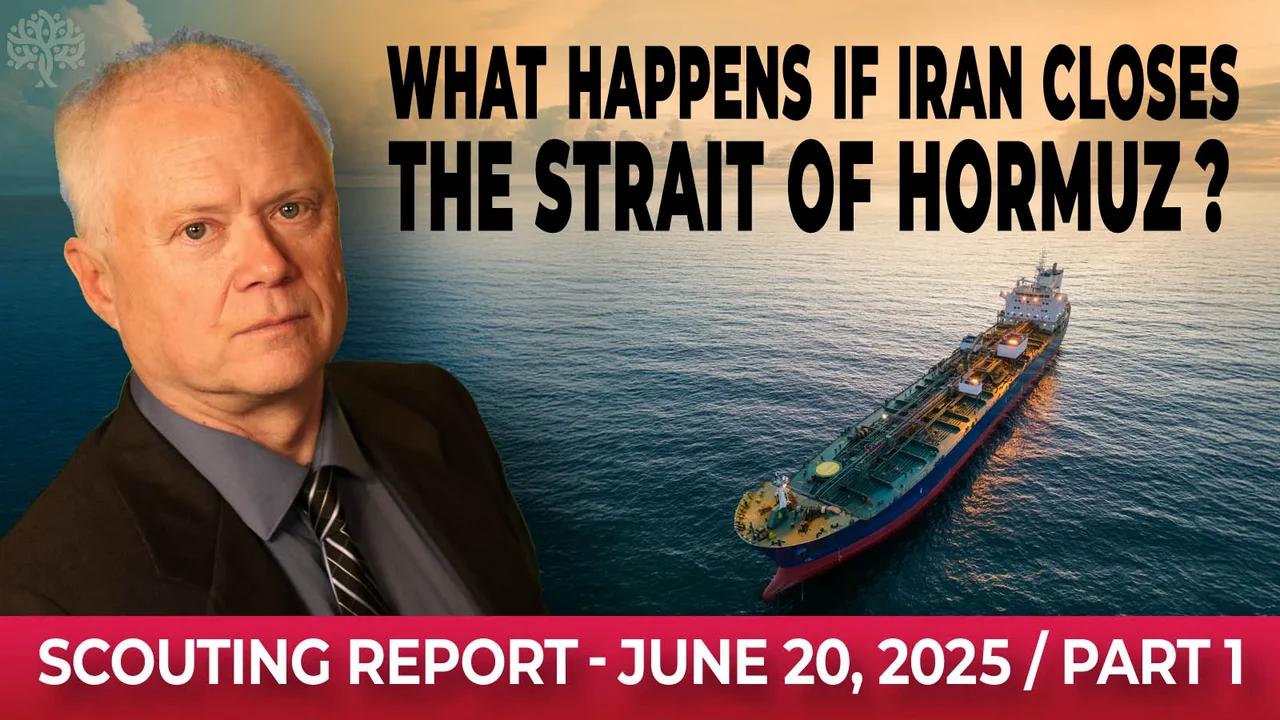
When foreign affairs expert Robinder Sachdev weighs in on the possibility of a blockade there, he isn't just talking about naval maneuvers or geopolitical posturing. He is talking about the heartbeat of global survival. If that heartbeat skips, the silence will be felt in every kitchen and boardroom on the planet. More analysis by NPR highlights comparable views on this issue.
Consider a mid-sized cargo ship. We can call it the Aura. Right now, it is slicing through the turquoise waters of the Persian Gulf, carrying thousands of tons of liquefied natural gas. The crew is thinking about lunch. The captain is checking the radar. But as they approach the Strait, they are entering a space where the air is thick with more than just humidity. It is thick with the weight of every decision made in Washington, Tehran, and Beijing.
The Strait of Hormuz is the artery. One-fifth of the world’s total oil consumption flows through it every single day. That is roughly twenty million barrels.
Imagine twenty million barrels of oil stacked end-to-end. They would stretch from London to Tokyo and back again. Now imagine someone putting a hand on the valve.
The Mechanics of a Ghost War
A blockade is a strange, phantom thing. It starts with words before it ever moves to steel. Sachdev points out that the decision to actually close the Strait is shrouded in uncertainty. It is a game of high-stakes chicken where no one wants to blink, but everyone has their foot on the gas.
The United States has long maintained that it will keep the sea lanes open. It is a promise backed by the sheer, terrifying scale of a carrier strike group. But a blockade doesn't have to be a wall of ships. It can be a field of "smart" mines, invisible beneath the waves. It can be a swarm of fast-attack boats, small enough to be missed until they are too close to ignore. It can be a drone hovering at an altitude that defies easy interception.
This is why the tension feels different this time. In the past, a blockade was a clear act of war. Today, it is a "gray zone" operation. It is a slow tightening of the throat.
If the US leads a counter-blockade or a "protection mission," the cost of shipping insurance doesn't just go up; it sky-rockets. A ship like the Aura becomes a liability overnight. If the insurance companies refuse to cover the hull, the ship stays in port. If the ship stays in port, the supply chain snaps.
Snap.
The lights in a factory in Vietnam flicker and die because the fuel for the generators didn't arrive. The price of bread in a Cairo market doubles because the logistics of moving grain have become a nightmare of risk and redirected routes. This isn't abstract. It is the raw, jagged edge of reality for billions of people who have never heard of Robinder Sachdev.
The Invisible Stakes
Why is the decision "unclear"? Because the consequences are too large for any one nation to truly stomach.
If Iran were to close the Strait, they would be cutting off their own economic lifeblood along with everyone else’s. It is the ultimate "scorched earth" policy. Yet, in the theater of international relations, the threat is often more useful than the action. The threat keeps the world on edge. The threat forces concessions.
But threats have a shelf life. Eventually, someone is forced to prove they aren't bluffing.
We often think of the global economy as a digital web—numbers on a screen, stock tickers, and bank transfers. We forget that it is actually a physical, mechanical system. It relies on the movement of massive objects across vast distances. When you obstruct a chokepoint like Hormuz, you aren't just hurting your enemies. You are throwing a wrench into the gears of the entire human project.
The US-led blockade looms not as a solution, but as a desperate reaction to an impossible choice. How do you protect the flow of energy without triggering the very conflict that will stop it?
The Human Cost of High Finance
Let’s go back to the Aura.
The captain receives a transmission. There has been an "incident." A drone strike on a tanker ten miles ahead. The orders are to hold position. The ship slows. The engines, which usually hum with a reassuring vibration, settle into an idle that feels like a held breath.
On land, the reaction is instantaneous.
In Chicago, a trader sees the news and executes a buy order. Oil prices jump by eight percent in eleven minutes.
In a suburb in England, a woman at a petrol station watches the digital numbers on the pump climb higher than she can afford. She has to decide between a full tank and a full grocery cart. She doesn't care about naval strategy. She cares about Tuesday.
This is the "human element" that experts often overlook when discussing "strategic chokepoints." Every barrel of oil represents a life lived, a job held, a house heated. When the Strait of Hormuz is threatened, it isn't just a map that changes. It is the standard of living for the global middle class.
The uncertainty Sachdev speaks of is the most dangerous part. Markets hate a vacuum, and they despise a mystery. As long as the decision remains unclear, the volatility remains high. This volatility acts as a tax on the poor. It is a "fear premium" paid by every person who buys a plastic bottle, a nylon shirt, or a gallon of milk.
The Gravity of the Moment
The history of the 21st century will not be written in the capitals of the great powers. It will be written in the narrow places.
Hormuz. Malacca. Suez. Panama.
These are the joints of the world. If they lock up, the body cannot move.
The US-led blockade is a gamble that strength can deter disruption. But strength is a blunt instrument in a delicate environment. The Strait of Hormuz is not just a body of water; it is a test of our collective sanity. Can we coexist in a world where we are all tethered to the same twenty-mile-wide lifeline? Or will we pull on that line until it snaps?
The Aura sits still in the water. The sun sets over the Gulf, turning the sea into a sheet of hammered gold. It looks peaceful. It looks like nothing is happening. But beneath the surface, the tide is pulling, and in the distance, the silhouettes of grey hulls are moving into position.
The world waits for a decision that no one wants to make, yet everyone is preparing for. We are all on that ship, watching the horizon, hoping the engines start again before the light fails completely.
The silence is the loudest thing in the room.