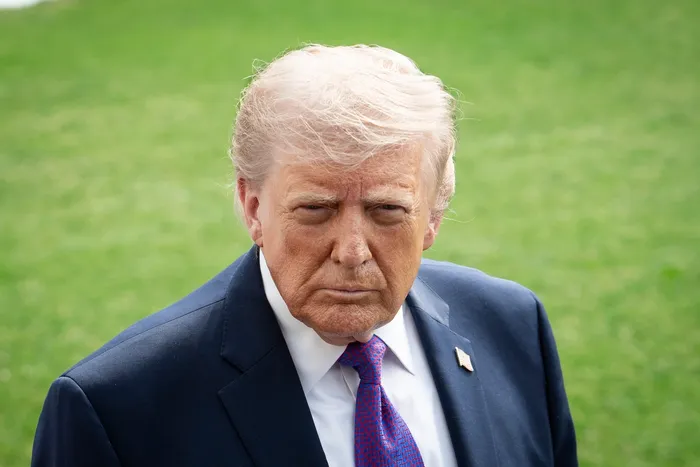
The headlines are screaming about a ten-day ceasefire between Israel and Hezbollah, brokered by Donald Trump. The markets are breathing a sigh of relief. The pundits are talking about "de-escalation" as if it’s a physical law. They are wrong.
This isn't a peace deal. It isn't even a pause. It is a tactical re-alignment masquerading as diplomacy. If you think ten days of silence in southern Lebanon means the risk of a regional meltdown has evaporated, you aren't paying attention to the mechanics of modern attrition. You’re falling for the optics.
The Myth of the "Cooling Off" Period
The lazy consensus suggests that ceasefires allow tempers to cool. In the Middle East, ceasefires allow barrels to cool.
A ten-day window serves exactly two purposes, and neither of them involves long-term stability. First, it allows for a logistical reset. Moving armor, repositioning missile batteries, and cycling tired infantry units is a nightmare under constant drone surveillance and artillery fire. A formal pause provides a "safe" corridor to do the heavy lifting that keeps a war machine from seizing up.
Second, it acts as a stress test for the incoming administration’s leverage. Trump isn't just stopping a war; he’s measuring his grip on the leash. But here is the nuance the mainstream misses: by setting a hard ten-day limit, the negotiators have essentially signaled when the next escalation begins. You don't build a bridge to peace in 240 hours; you just build a countdown clock.
The Logic of the 10-Day Horizon
Why ten days? It’s long enough to dominate a news cycle and short enough to avoid making any real concessions on territory or sovereignty.
Consider the geography. The core issue remains the implementation of UN Resolution 1701—the demand that Hezbollah move north of the Litani River. A ten-day pause does nothing to address the thousands of hardened bunkers or the political reality that Hezbollah is the state in Lebanon.
I have watched diplomatic "wins" like this dissolve before the ink is dry. In 2006, the world thought they had solved the problem. They hadn't. They just pushed the problem into a basement for two decades. This current "deal" is the 2026 version of kicking a live grenade down a very short hallway.
The Misunderstood Leverage of Donald Trump
The common narrative is that Trump’s "unpredictability" forced both sides to the table. This is a half-truth. The reality is that both Israel and Hezbollah are currently hitting a wall of diminishing returns.
- Israel’s Constraint: They have decimated Hezbollah’s leadership, but they are now facing the grinding reality of urban guerrilla warfare. Occupying southern Lebanon is a financial and political sinkhole.
- Hezbollah’s Constraint: Their command and control is shattered, and their Iranian backers are looking at a domestic economic crisis that makes funding a multi-front war increasingly difficult.
Trump isn't a magician; he’s a liquidator. He’s looking at a bad trade and trying to close the position before the losses become catastrophic for U.S. interests. But a liquidator doesn't care about the long-term health of the company—they just want the books to look clean for the quarterly report.
The Invisible Cost of Temporary Peace
While the world cheers for the absence of sirens, the price of this pause is being paid in strategic depth.
When you pause a conflict without a definitive resolution, you incentivize the "gray zone." Expect to see an explosion in cyber-attacks, covert assassinations, and "unclaimed" sabotage over the next ten days. If you can’t fire a missile without breaking a ceasefire, you find other ways to bleed your opponent.
For the business world, this is the most dangerous period. Volatility doesn't disappear during a ceasefire; it just compresses. Like a spring being pushed down, the energy is still there—it’s just waiting for day eleven.
Challenging the "People Also Ask" Assumptions
Is this the end of the war? No. It is a change in the cadence of the war. To call this the "end" is to ignore the fundamental ideological divide that hasn't moved an inch.
Will this lower oil prices? Temporarily, yes, due to sentiment. But the underlying supply chain risks in the Eastern Mediterranean remain. Smart money isn't betting on a long-term dip; they’re buying the hedge while it’s cheap.
Does Lebanon benefit? The Lebanese people get a breather, but the Lebanese state remains a ghost. A ceasefire brokered between a foreign power and a non-state actor (Hezbollah) over the head of a nominal government only further proves that Beirut has no seat at its own table.
The "Agreement" is a Placeholder
We need to stop using the word "agreement" as a synonym for "solution."
In high-stakes geopolitics, an agreement is often just a mutual acknowledgement that both sides need to reload. I’ve seen this play out in corporate takeovers and board-room coups. You call a truce to count your votes and check your bank balance.
If this were a real peace deal, we would see:
- A timeline for the total disarmament of non-state militias.
- A verifiable withdrawal plan that includes international observers with actual teeth.
- A massive economic reconstruction package tied to specific security benchmarks.
We see none of that. We see a ten-day timer.
The Reality of the "New" Diplomacy
The status quo media loves a "breakthrough" story. It’s easy to write. It has a hero, a villain, and a happy ending. But the reality is far messier. We are entering an era of "Transactional Conflict Management."
In this model, we don't solve problems; we rent peace. We pay for it with temporary concessions and diplomatic theater. The problem with renting is that you never own the outcome. You’re always one missed payment—or one stray rocket—away from eviction.
Israel knows this. Hezbollah knows this. The only people who don't seem to know it are the ones currently celebrating on cable news.
The Tactical Pivot
If you are operating in this region or invested in its stability, do not change your posture based on a ten-day window. Use this time to harden your positions. If you are a business leader with exposure in the Levant, use these ten days to finalize your contingency plans.
Imagine a scenario where the ten days expire and the "agreement" is extended by another week, then another. This creates a "zombie peace"—a state where no one is officially at war, but no one is safe. This is actually worse for long-term investment than an active conflict, because it creates an unquantifiable risk profile.
Stop Looking at the Calendar
The obsession with the "ten-day" figure is a distraction. The real story is what happens on day eleven. If there is no follow-up, if there is no structural change to the security architecture of the border, then these ten days were just a high-budget commercial for a product that doesn't exist.
The "ceasefire" is a vanity metric. It looks good on a chart, but it tells you nothing about the health of the underlying asset.
The war hasn't stopped. It has just gone quiet. And in the Middle East, the quiet is usually when the real damage is done.
Put your helmet back on. The clock is ticking.