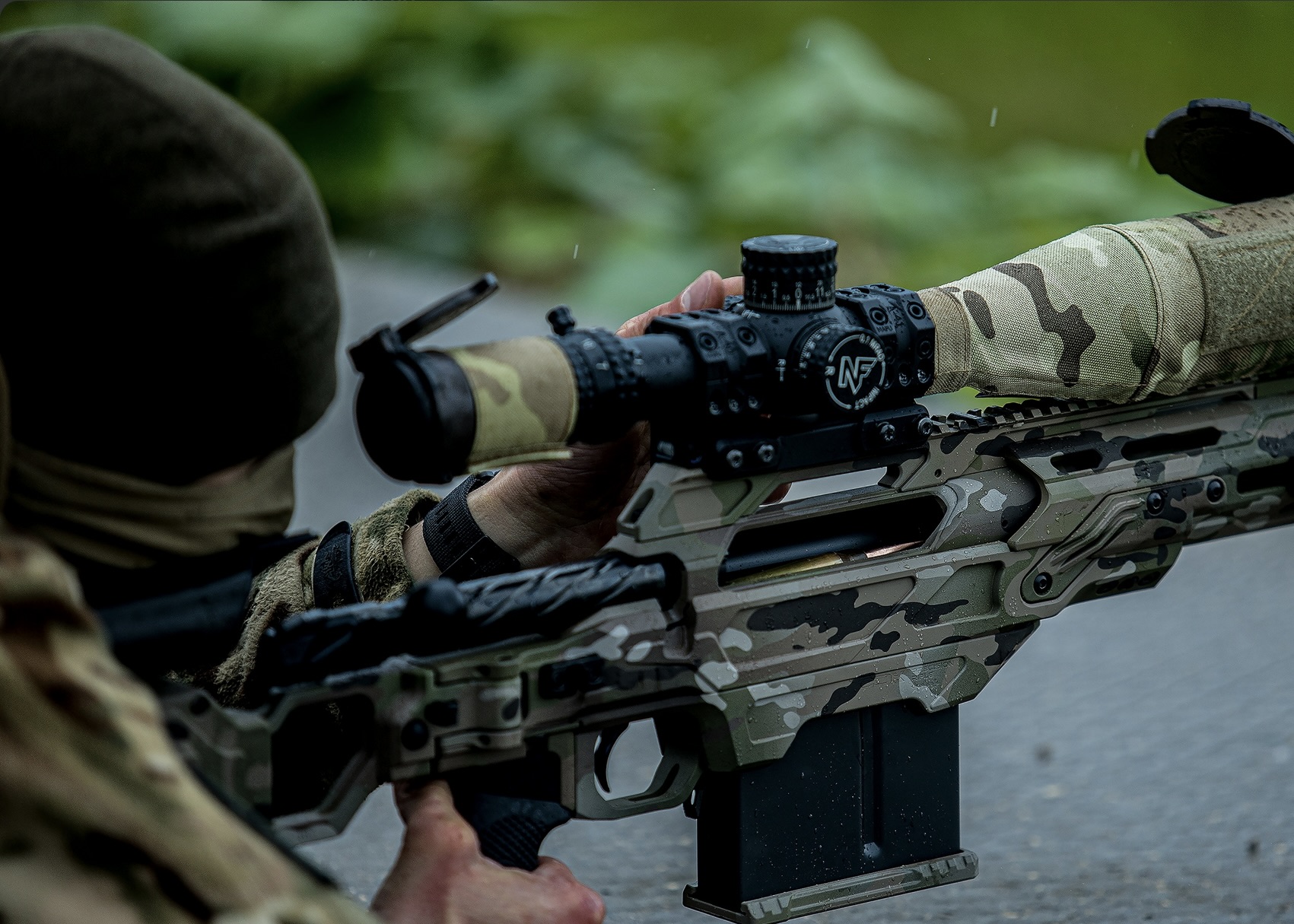
Canadian intelligence officers recently descended on the headquarters of PGW Defence Technologies in Winnipeg, Manitoba. They weren't there for a social call. They were there because their flagship product—the LRT-3 sniper rifle—has been appearing in the hands of Russian forces on the front lines in Ukraine. This isn't just a localized scandal involving one boutique arms manufacturer. It is a damning indictment of a global arms procurement system that is porous, easily manipulated by shell companies, and currently failing to prevent Western tech from being used against Western interests.
The Winnipeg Connection to the Russian Front
The discovery of Canadian-made precision hardware in Russian hands is a PR nightmare for Ottawa. Canada has positioned itself as one of Ukraine's most vocal allies, shipping billions in aid and military equipment to Kyiv. Yet, social media footage and battlefield recoveries have confirmed that Russian snipers are using the .50 caliber LRT-3 to pick off Ukrainian targets.
This creates a grim irony. A rifle engineered on the Canadian prairies, designed for extreme long-range accuracy and reliability, is now being used to dismantle the very defense effort Canada is funding. For PGW Defence Technologies, the visit from the Canadian Security Intelligence Service (CSIS) and the Royal Canadian Mounted Police (RCMP) signals a desperate attempt by the federal government to find out how these "restricted" items are slipping through the net.
The company maintains they have followed every rule on the books. They don't sell to Russia. They haven't sold to Russia in years. But in the world of international arms dealing, a direct sale is rarely how the most dangerous tools find their way into the wrong hands.
The Third Party Shell Game
The primary mechanism for this gear migration is the "End-User Certificate" (EUC) loophole. On paper, the system is simple. When a company like PGW wants to export a high-powered sniper system, they must obtain a permit from Global Affairs Canada. This permit requires a certificate from the buyer promising that the weapons will stay in their possession and won't be resold without Canadian permission.
It is a paper shield in a lead-based world.
Middlemen in countries with lax oversight—think Turkey, the UAE, or former Soviet republics in Central Asia—frequently act as "clean" buyers. They provide the necessary paperwork, the Canadian government checks the boxes, and the rifles are shipped. Once the crates land in Istanbul or Dubai, the paper trail goes cold. The rifles are "lost" in transit, sold to private security firms that exist only on a legal letterhead, or simply re-exported under a different classification.
Russia has spent decades building these shadow networks. When the 2022 invasion triggered massive sanctions, these networks didn't break. They optimized. They began sourcing components and finished weapon systems through a web of front companies that buy in small quantities to avoid raising red flags at customs. One rifle here, five there. Over time, it adds up to a fully equipped elite unit.
Precision Engineering as a Liability
The LRT-3 is not a generic firearm. It is a specialized tool capable of hitting targets at over 1,800 meters. This level of precision requires high-grade steel, exacting tolerances, and specialized optics. Russia has its own arms industry, but its domestic production often struggles with the consistency required for high-end sniping.
The fact that Russian forces are going to such lengths to secure Canadian rifles tells us two things. First, their domestic alternatives are failing their elite units. Second, the prestige of Canadian engineering has inadvertently made these rifles a high-value target for Russian intelligence operatives tasked with "gray market" procurement.
When CSIS agents walked through the doors at PGW, they weren't just looking for a "smoking gun" email or a secret contract with the Kremlin. They were likely looking for the names of international brokers. They want to know which "legitimate" buyers in the Middle East or Eastern Europe suddenly developed an appetite for long-range precision rifles right before they vanished into the Russian supply chain.
The Failure of Export Enforcement
Canada’s export control regime is often described as one of the most stringent in the world. This is a comforting myth. The reality is that Global Affairs Canada is better at processing paperwork than it is at conducting field audits.
Once a crate of rifles leaves a Canadian port, the government has almost zero visibility into where those weapons end up. There is no "GPS for guns" that allows Ottawa to track a bolt-action rifle once it reaches a warehouse in a foreign country. We rely entirely on the word of foreign governments and private contractors, many of whom have a financial incentive to look the other way.
Furthermore, the RCMP and CSIS are playing catch-up. Investigating an international arms smuggling ring requires years of cross-border cooperation and deep-cover intelligence. By the time a rifle is identified in a Telegram video from the Donbas, the trail of the broker who bought it is usually two years old and buried under five different corporate aliases.
The Myth of Post-Sale Control
The government often talks about "post-shipment verification." This is the idea that Canadian officials can periodically check in on exported weapons to ensure they are still where they are supposed to be.
In practice, this rarely happens. Canada does not have the manpower or the diplomatic weight to demand a physical inventory of every rifle it sells to a "friendly" nation. Even if they did, a country like South Africa or Turkey can simply claim the weapons were destroyed in training, lost in a localized conflict, or stolen by rogue actors. There are no real consequences for a "lost" shipment other than a temporary pause in future permits—a pause that usually ends once the political heat dies down.
Business Interests Versus National Security
PGW Defence Technologies is a business. Like any manufacturer, they want to grow, export, and keep their workforce employed. The Canadian government encourages this. Exporting high-tech military hardware is seen as a way to bolster the domestic defense industrial base and keep Canada competitive in a global market dominated by the US, Russia, and China.
But there is a fundamental tension here. The more you export, the higher the statistical probability that your product will end up in a conflict zone you didn't intend for it to reach. When the government grants an export permit, they are making a calculated gamble. They are betting that the economic benefit and the diplomatic "bridge-building" of the sale outweigh the risk of the hardware being turned against them.
In the case of the LRT-3, that gamble failed.
The investigation into PGW will likely conclude that the company followed the law. They probably have every signed EUC and every stamped permit in a neat folder. The problem isn't that the company broke the rules; the problem is that the rules are designed for a world of clear borders and honest actors. We don't live in that world anymore.
The Invisible Procurement Web
Russian intelligence, specifically the GRU, has become adept at "shopping" in the West. They don't send men in trench coats to Manitoba. They use sophisticated brokers who specialize in "dual-use" or restricted technologies. These brokers often deal in everything from microchips to heavy machinery, making a few dozen sniper rifles look like a rounding error in their total trade volume.
They exploit the fact that Western bureaucrats are focused on the "big stuff"—missile systems, tanks, and fighter jets. A bolt-action rifle, even a highly advanced one, often slips through the cracks of high-level intelligence monitoring. It is seen as "small arms," a category that is notoriously difficult to track.
But in a modern trench war, a single sniper with an LRT-3 can hold down an entire platoon. It is a strategic asset delivered in a tactical package.
The Limits of Sanctions
This incident exposes the soft underbelly of the Western sanctions regime. We can freeze the bank accounts of oligarchs and stop the flow of natural gas, but stopping the flow of high-end mechanical goods is nearly impossible. If there is a demand for a product, and that product is portable and high-value, the black market will find a way to deliver it.
To truly stop Canadian rifles from reaching Russia, the government would need to do more than just interview CEOs in Winnipeg. They would need to blacklist entire brokerage firms and sanction the third-party countries that facilitate these transfers. That is a diplomatic headache Ottawa has shown little appetite for. It is much easier to visit a local factory, issue a stern press release, and hope the news cycle moves on before the next video of a Canadian rifle in a Russian trench surfaces.
Hardware is Hard to Hide
The only reason we know about these rifles is that they are physically distinct. The LRT-3 has a specific profile. It uses specific magazines. It has a specific muzzle brake. Unlike a generic AK-pattern rifle or even a standard AR-15, the PGW products are identifiable even in grainy drone footage.
This visibility is a double-edged sword. It allows for the kind of accountability we are seeing now, but it also highlights how many other, less-distinct Canadian products might be flowing into Russia undetected. If they are getting the sniper rifles, what else are they getting? Are they getting the high-grade optics? The specialized ammunition? The thermal imaging sensors?
The answer is almost certainly yes.
The investigation in Winnipeg is a reactive measure. It is an attempt to close the barn door after the horse has not only bolted but has been drafted into an enemy army. If Canada wants to prevent its technology from being used to kill its allies, it needs to stop pretending that an End-User Certificate is worth the paper it’s printed on.
Until there are real-time tracking requirements and massive financial penalties for "lost" shipments that end up in the hands of sanctioned regimes, the path from a Canadian factory to a Russian sniper nest will remain open. The Winnipeg visit is a symptom of a systemic failure, not a solution to it. The reality is that as long as these weapons are for sale on the global market, the highest bidder—or the most patient smuggler—will eventually get them.
The rifles currently in the Donbas are gone. They are now part of the Russian arsenal, and no amount of "industry analysis" or "intelligence visiting" will bring them back. The question is how many more are currently sitting in warehouses in "friendly" third-party countries, waiting for the final leg of their journey to Moscow.
Identify the brokers. Sanction the middlemen. Or accept that "Made in Canada" will continue to be a label found on both sides of the front line.