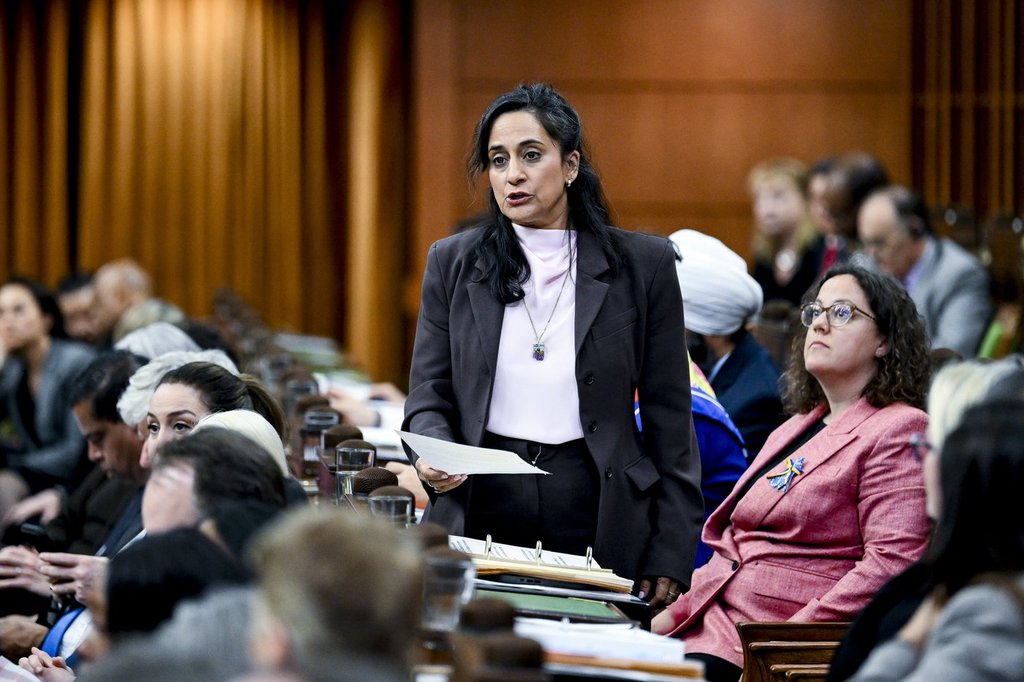
The standard narrative surrounding Treasury Board President Anita Anand’s recent push into the Persian Gulf reads like a sanitized press release. It suggests a strategic "deepening" of ties, a clever pivot to diversify Canada’s trade portfolio, and a noble attempt to bolster global security. This is a fairy tale. In reality, this trip represents a frantic, late-game scramble by a middle power that has spent the last decade alienating the very energy and security giants it now begs for attention.
Canada isn’t "partnering" with the United Arab Emirates or Saudi Arabia. It is auditioning for a role it can no longer play. For years, Ottawa treated the Gulf as a moral inconvenience. Now, facing stagnant domestic growth and a fractured relationship with traditional Western allies, the government is attempting a high-stakes pivot that ignores the cold, hard mechanics of Middle Eastern realpolitik.
The Myth of the Security Partner
The competitor's view frames Canada as a vital defense collaborator. This is a fundamental misunderstanding of how the Gulf states view military utility. Countries like the UAE and Saudi Arabia are no longer interested in "dialogue" or "capacity building" from nations that hesitate to fulfill arms contracts.
When Canada froze new arms export permits to Saudi Arabia in 2018, it didn't just take a moral stand; it telegraphed to the entire region that Ottawa is an unreliable supplier. In the Gulf, defense is about ironclad commitments, not fluctuating domestic political sentiment. While Anand talks about "defense ties," the reality is that the Gulf has already moved on. They are buying from the French, the Chinese, and the Turks—suppliers who don't attach "values-based" caveats to every spare part.
Canada’s defense industry is struggling. We are not a powerhouse of military innovation in the 2020s. We are a nation that struggles to procure its own basic equipment on time. Pitching Canadian "expertise" to nations currently operating the most advanced missile defense systems and drone swarms on the planet isn't a strategic move—it's an embarrassment.
Economic Diversification Is a One-Way Street
The pitch for "economic ties" is equally hollow. The Gulf sovereign wealth funds—Mubadala, the PIF, the ADIA—are not looking for Canadian moral leadership. They are looking for returns.
Canada likes to pretend it is an attractive destination for Gulf capital. However, our regulatory environment tells a different story. We have effectively killed our own internal energy infrastructure, making it nearly impossible for foreign investors to see a clear path to export. Why would a Gulf investor pour billions into Canadian LNG or critical minerals when the Canadian government itself can’t decide if it wants these industries to exist?
The "lazy consensus" suggests that a few ministerial handshakes will open the floodgates for UAE investment into Canadian tech or green energy. I have seen countless Canadian trade delegations return from Dubai with empty Rolodexes because they failed to realize one thing: the Gulf doesn't need our money. They need our assets, and we’ve spent years making those assets toxic or inaccessible through bureaucratic red tape.
The Energy Hypocrisy
The most glaring flaw in Anand’s mission is the total lack of self-awareness regarding energy. Canada is a global energy titan that acts like a boutique shop. We are currently importing oil while sitting on the third-largest reserves in the world.
When Canadian officials land in Riyadh or Abu Dhabi to discuss "energy security," the irony is thick enough to choke on. These nations understand energy as the ultimate lever of power. They see a Canada that refuses to build pipelines to its own coasts and wonder why they should take us seriously as a global player.
The Gulf states are currently the masters of the global energy transition. They are using oil wealth to build massive solar arrays and hydrogen hubs. They are playing the long game. Canada is playing a game of catch-up, trying to sell "green tech" to the people who are actually building it at a scale we can only dream of.
Dismantling the People Also Ask Premise
Common questions about Canada-Gulf relations often focus on "human rights versus trade." This is the wrong question. It assumes Canada has the leverage to make that choice.
In 2026, the power dynamic has shifted. The Gulf states aren't asking for Canada’s approval. They are asking what Canada can actually deliver. If the answer is "more committees and a few medium-sized tech startups," then the trip is a failure before the plane even lands.
Another common query: "Can Canada replace Russian energy in the global market?" The honest, brutal answer is no—not because we lack the resources, but because we lack the political will. Moving toward the Gulf to talk about energy security while we block our own projects is a performance, not a policy.
The Cost of the Charm Offensive
There is a downside to this contrarian view: the risk of total irrelevance. If Canada continues to approach these meetings with a "teacher-student" mindset, we will be laughed out of the room. The Gulf is the new center of the world's capital and energy flows. They are the ones with the leverage.
If we want actual results, we need to stop pitching "values" and start pitching "value."
- Stop the Virtue Signaling: Foreign policy is not a tool for domestic base mobilization. If you want a defense relationship, you provide the hardware and the support without the threat of a sudden freeze based on the latest Twitter trend.
- Open the Energy Gates: You cannot talk about economic ties while keeping the Canadian energy sector in a regulatory straitjacket.
- Intellectual Honesty: Admit that we are the ones in need. We need their capital to fix our sagging productivity. We need their stability in the energy markets to keep our own economy afloat.
The Reality of Middle Power Decline
Anand’s trip is a symptom of a broader Canadian identity crisis. We still act like the "honest broker" of the 1990s. But the world of 2026 is multipolar, transactional, and increasingly cynical. The Gulf states are the ultimate practitioners of this new reality. They see through the high-minded rhetoric. They see a country with a high debt-to-GDP ratio, a housing crisis, and a crumbling military.
When the Canadian delegation talks about "strengthening ties," the Gulf hosts see a middle power trying to stay relevant in a world that is rapidly outgrowing it. They will be polite. They will sign a few non-binding Memorandums of Understanding. They will take the photos. And then, the moment the Canadians leave, they will go back to the real business of negotiating with the heavy hitters who actually have something to trade.
The "superior article" isn't about how we can win over the Gulf. It's about recognizing that we’ve already lost the ground we’re trying to stand on. We aren't leading a pivot; we are following the money, hat in hand, hoping they don't remember all the times we lectured them from the moral high ground.
Canada's "pitch" isn't a strategy. It's a prayer.
Stop pretending this is a position of strength. It is the final gasp of a foreign policy that chose platitudes over pipelines and felt-good politics over hard-nosed realism. If you want to "deepen ties" with the Gulf, stop talking and start building something they actually want to buy. Until then, these trips are just expensive photo ops for a government that has run out of ideas.