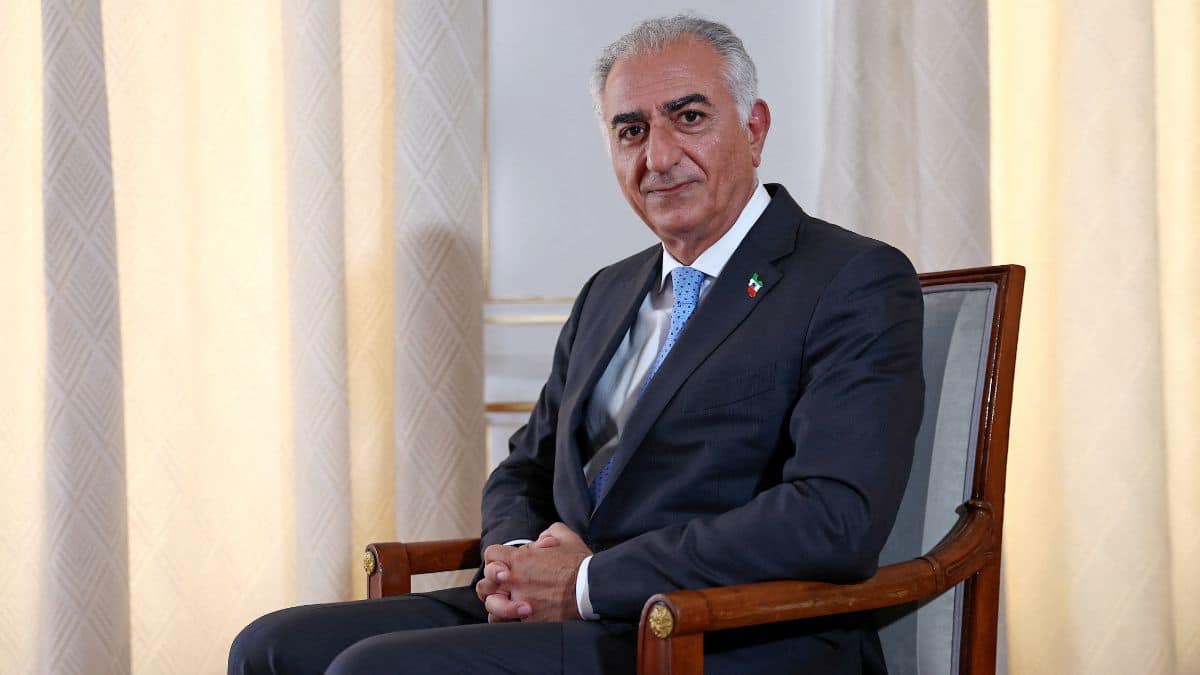
The death of Ayatollah Ali Khamenei on February 28, 2026, has stripped the Islamic Republic of its primary architect, leaving a vacuum that no single figure is currently strong enough to fill. While the state-mandated mourning period is in full swing, the real action is happening behind the heavy curtains of the Assembly of Experts and the barracks of the Islamic Revolutionary Guard Corps (IRGC). The transition is not just about a change in personnel. It is an existential struggle between a dying clerical ideal and a rising military junta, all while a ghost from the past, Reza Pahlavi, attempts to turn street chants into a political reality.
The immediate mechanism of power has fallen to a temporary council. This trio includes President Masoud Pezeshkian, Judiciary Chief Gholam-Hossein Mohseni-Eje’i, and a rotating member of the Guardian Council. It is a fragile arrangement. Pezeshkian represents the pragmatists who want to keep the ship from sinking, while Mohseni-Eje’i acts as the enforcer for the hardline establishment. But make no mistake, these men are caretakers, not kings.
The Secret Shortlist and the Son
For years, the Assembly of Experts has maintained a "top secret" list of potential successors. In the frantic hours following the airstrikes that claimed Khamenei, that list has become the most dangerous document in Tehran.
Mojtaba Khamenei, the late leader's second son, has long been the shadow player. He controls significant financial networks and has deep-seated ties with the IRGC’s intelligence wing. However, he faces a hurdle that might be insurmountable: the legacy of the 1979 Revolution itself. The Islamic Republic was founded on the rejection of hereditary monarchy. Elevating a son to replace a father would look remarkably like the system Ruhollah Khomeini died trying to destroy.
Opponents within the clergy are already whispering that a Mojtaba "dynasty" would be a gift to the opposition. It would validate every criticism that the revolution has simply replaced one crown with a turban.
Clerical Contenders and the Military Shadow
Beyond the Khamenei bloodline, the names being circulated are men of the apparatus.
- Alireza Arafi: A member of the Guardian Council and head of Iran’s seminary system. He is the "safe" choice for those who want to maintain the clerical status quo. He lacks charisma but has the institutional backing to keep the bureaucracy running.
- Gholam-Hossein Mohseni-Eje’i: As the head of the judiciary, he is the iron fist. His elevation would signal a move toward a "security-first" state, prioritizing internal suppression over any form of external diplomacy.
- Hassan Khomeini: The grandson of the Revolution’s founder. He is the wildcard. Viewed as a "reformist" by some and a traitor by others, his presence on the shortlist is likely an attempt to offer a more conciliatory face to a public that is increasingly hostile toward the regime.
While these clerics debate, the IRGC has already moved. Since the 2025 conflict with Israel, operational authority has shifted toward the military. Figures like Ali Larijani, now leading the Supreme National Security Council, have taken over the day-to-day management of the state's survival. The IRGC does not necessarily need a Supreme Leader with high religious credentials; they need a rubber stamp.
The Pahlavi Factor
Thousands of miles away, Reza Pahlavi is positioning himself as the only alternative to chaos. His rhetoric has sharpened significantly since the January 2026 protests. When he claims that "millions are calling my name," he is pointing to the chants heard in the streets of Mashhad, Isfahan, and Tehran.
Pahlavi’s strategy is built on "maximum defection." He is not calling for a bloody civil war but for the rank-and-file of the Iranian military to abandon the regime and join a transitional council. It is a high-stakes gamble. For Pahlavi, the current vacuum is the first real crack in the foundation since 1979.
However, nostalgia is a fickle political base. While many younger Iranians, born decades after the Shah’s fall, view the Pahlavi era through the lens of economic stability and social freedom, the organized opposition remains fractured. Ethnic minorities in the Kurdish and Balochi regions, while unified in their hatred of the current regime, are wary of a return to a centralized monarchy.
The Reality of the Streets
Inside Iran, the atmosphere is not one of mourning, but of terrifying anticipation. The internet blackouts that began in early 2026 have only partially lifted. The economy is in a tailspin, with the rial hitting record lows. People are not just looking for a new leader; they are looking for bread and a way out of a perpetual state of war.
The regime’s biggest threat isn’t a single candidate or an exiled prince. It is the loss of the "fear factor." Khamenei was the ultimate arbiter, the man who could settle disputes between the IRGC and the politicians. Without his aura of divine authority, the internal factions are likely to turn on each other. If the Assembly of Experts fails to produce a name within the next few days, the IRGC may decide that the era of the Supreme Leader is over, replacing it with a military council that dispenses with the religious pretenses entirely.
Succession in Iran has only happened once before, in 1989. Then, the system was unified and the revolutionary fervor was still warm. Today, the system is exhausted, the borders are under fire, and the public is waiting for a chance to finish what they started in the streets. The choice made in the coming days won't just determine who sits in the seat of power—it will determine if the seat still exists a month from now.
Would you like me to analyze the specific economic indicators of the Iranian rial's collapse during this transition period?