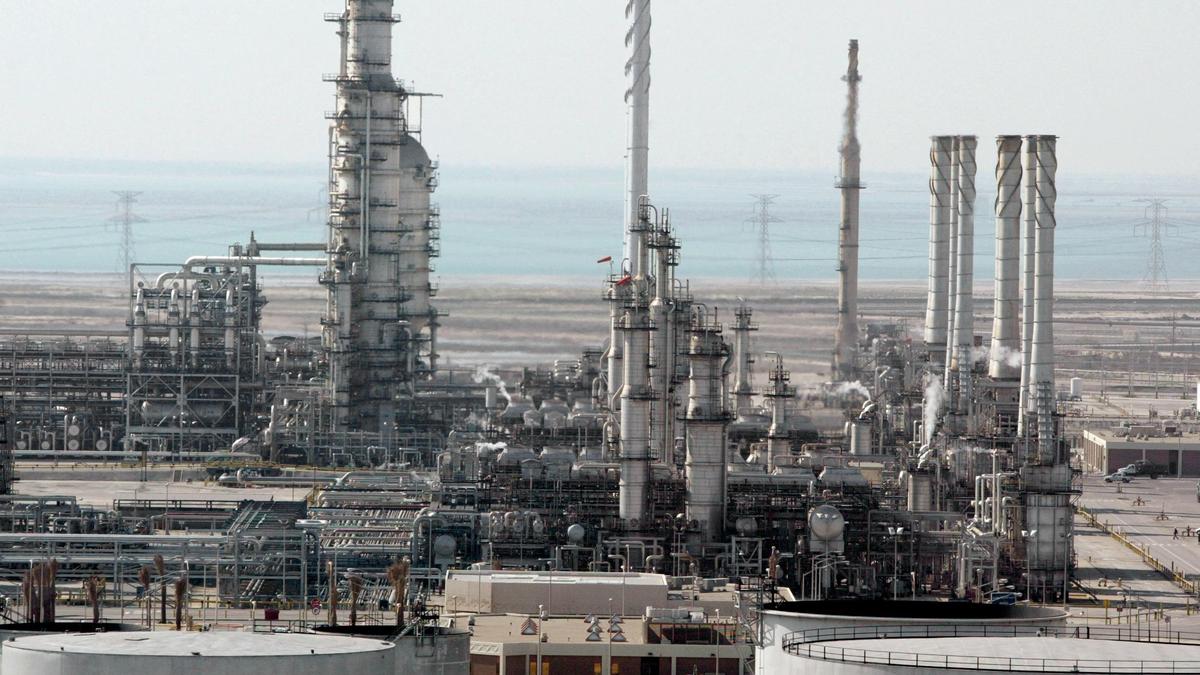
Crude oil is the only commodity that can bring the global economy to its knees in a matter of weeks. While markets currently fret over short-term fluctuations, the underlying math suggests we are drifting toward a structural supply deficit that could easily push Brent crude past $120 per barrel. This isn't just about a single war or a cold winter. It is the result of a decade of systematic underinvestment in traditional drilling, combined with a geopolitical realignment that has stripped the West of its ability to dictate prices.
The era of cheap, reliable energy is fracturing. To understand where prices are going, we have to look past the daily noise of algorithmic trading and confront the physical reality of the wells.
The Death of the Spare Capacity Myth
For decades, the global economy relied on a comfortable cushion. If a pipeline blew up in Nigeria or a strike hit a refinery in France, Saudi Arabia would simply turn a literal or metaphorical valve. That "spare capacity" was the world’s insurance policy.
Today, that policy has lapsed.
The industry defines spare capacity as production that can be brought online within 30 days and sustained for at least 90. Currently, the global buffer is razor-thin, likely sitting at less than 2% of total demand. When the margin of error is that small, any minor technical glitch or regional skirmish sends prices vertical. We are flying a jumbo jet with only a few gallons of fuel left in the reserve tank.
This scarcity is a choice. Between 2014 and 2022, capital expenditure in upstream oil and gas plummeted. Under pressure from activists and ESG-focused boardrooms, the "Supermajors" shifted their cash flow toward stock buybacks and renewable experiments. They stopped hunting for the massive, "elephant" oil fields that provide the base load for global energy. You cannot replace a 20-year decline in a deepwater well with a quick shale drill in West Texas.
Why Shale Cannot Save Us This Time
The United States became the world’s largest oil producer thanks to the fracking revolution. It was a miracle of engineering that convinced many analysts that $100 oil was a relic of the past. But the shale patch has changed. It is no longer a wild-frontier industry fueled by cheap debt and a "drill at any cost" mentality.
Investors have finally demanded profits. Companies like Pioneer and Continental are now prioritizing "value over volume." Instead of flooding the market to grab market share, they are keeping production flat to ensure dividends remain high. Furthermore, the best "Tier 1" acreage in the Permian Basin is being exhausted. We are seeing lower initial production rates and faster decline curves. Shale is maturing, and a mature giant cannot sprint.
If the U.S. cannot act as the swing producer, the power shifts back to the hands of the OPEC+ bloc. This time, however, the cartel has a new objective.
The Geopolitical Floor Under Prices
The relationship between Washington and Riyadh has fundamentally shifted from a strategic partnership to a transactional rivalry. The Kremlin, meanwhile, views high energy prices as its most effective weapon against Western sanctions. Together, these forces have created a "price floor" that didn't exist ten years ago.
OPEC+ no longer fears that high prices will destroy demand. They have watched the world struggle to transition to electric vehicles and realized that for heavy shipping, aviation, and plastics, there is no immediate substitute for a barrel of crude. Their strategy is now transparent: cut production early and often to maintain a price environment that supports their domestic budgets.
For Russia, the magic number is often cited around $80 to $90. For Saudi Arabia’s massive "Vision 2030" projects, it might be even higher. They have the motive and the means to keep the market tight.
The Invisible Cost of the Energy Transition
There is a staggering irony in the current energy landscape. The push for a green transition is actually making oil more expensive and the market more volatile.
By signaling that oil is a "sunset industry," governments have discouraged the very investment needed to keep prices stable during the transition. We are moving toward a new house before the old one is finished, and we’ve stopped paying for the maintenance on the roof.
- Refinery Bottlenecks: It isn't just about getting crude out of the ground; you have to turn it into gasoline and diesel. No new major refinery has been built in the U.S. since the 1970s. Existing plants are running at nearly 95% capacity.
- Inventory Depletion: The Strategic Petroleum Reserve (SPR), which was designed for national emergencies, has been used as a political tool to suppress prices at the pump. This has left the cupboard bare. If a true supply disruption occurs, there is no "rainy day" fund left to tap.
The $150 Scenario
What actually triggers the leap from $80 to $150? It usually starts with a "Black Swan" event interacting with these weak fundamentals.
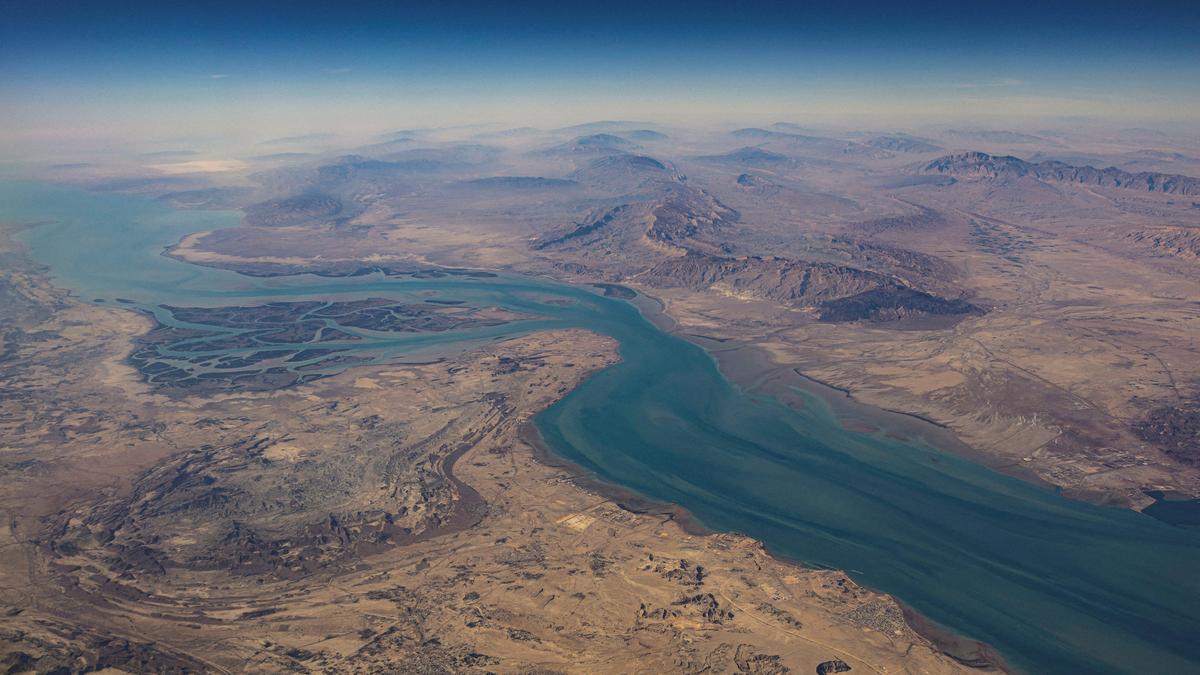
Imagine a scenario where a hurricane hits the Gulf Coast refining hub at the same time a major insurance crisis halts tankers in the Strait of Hormuz. In a well-supplied market, this is a headache. In today’s market, it is a catastrophe.
We must also consider the "rebound effect" in China. As the world’s largest importer, any uptick in Chinese industrial activity adds millions of barrels to daily demand. If the East wakes up just as the West’s production plateaus, the resulting price spike will be violent. It won't be a slow climb; it will be a gap up that leaves central banks powerless.
The Inflationary Feedback Loop
High oil prices are "sticky" because they permeate every layer of the supply chain. It costs more to farm the corn, more to ship the wheat, and more to package the bread. When oil stays above $100 for more than a quarter, it ceases to be a commodity story and becomes a systemic inflation story.
Central banks respond by raising interest rates, which increases the cost of capital for energy companies, which further discourages them from drilling new wells. This is the "doom loop" of energy economics. We are currently trapped in the early stages of this cycle.
Watching the Physical Indicators
To see the real trend, stop watching the news tickers and start watching the "spreads." In oil trading, backwardation—where immediate delivery is more expensive than future delivery—is the most honest signal of physical tightness. When the "prompt" price is significantly higher than the price six months out, it means refineries are desperate for barrels right now.
We are seeing persistent backwardation even during periods of supposed economic slowing. This suggests that the physical market is much tighter than the paper market (the speculators) believes. The disconnect between the two can only last so long before the paper market is forced to catch up, usually through a massive short squeeze that catapults prices higher.
The Hard Truth for Consumers
There is no "quick fix" on the horizon. A new offshore project takes seven to ten years from discovery to first oil. We cannot simply "drill our way out" of a decade of neglect in six months.
The reality is that we are entering a period of permanent energy insecurity. Prices will not return to the $40–$60 range that defined the 2010s because the cost of producing that marginal barrel has risen. Labor costs, equipment shortages, and regulatory hurdles have baked in a higher price for the foreseeable future.
Prepare for a world where $100 is the new baseline, not the ceiling. The friction between an old energy system that we are starving of capital and a new energy system that isn't yet ready to carry the load will be paid for at the pump, in the grocery aisle, and in the heating bill.
Watch the inventory levels in Cushing, Oklahoma. If those tanks hit "tank bottoms"—the minimum level required for the pipes to function—the price of oil will no longer be determined by supply and demand. It will be determined by panic.