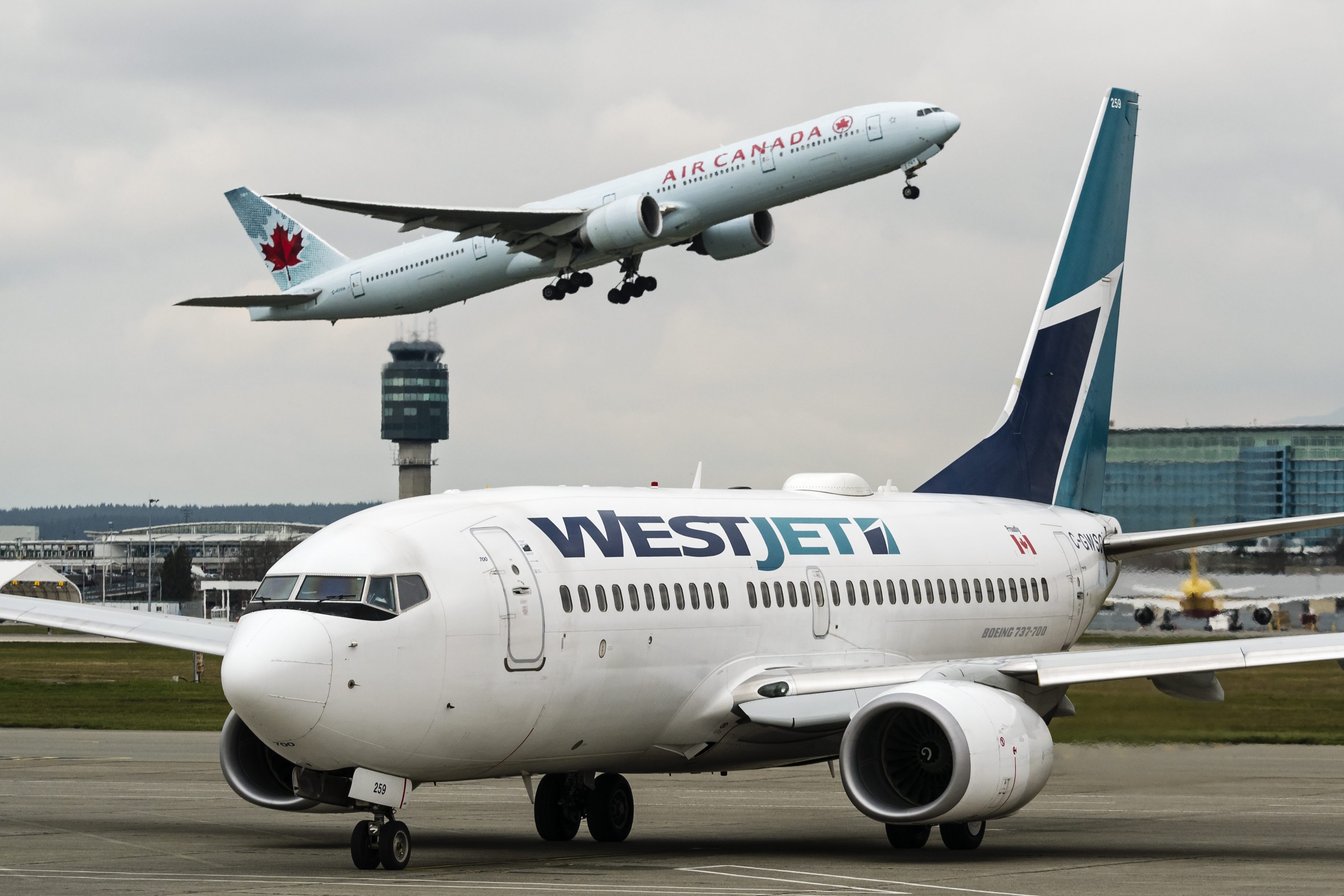
WestJet has begun aggressively slashing its flight capacity to offset the suffocating weight of rising jet fuel prices. This move follows a similar retreat by Air Canada, signaling a coordinated contraction in the country’s aviation market. For the average traveler, this means fewer options and significantly higher fares. The domestic airline industry is effectively passing the buck to the consumer as it struggles to maintain margins against a volatile energy market and a regulatory environment that offers little relief.
The Illusion of Choice in the Canadian Skies
To understand why WestJet is pulling back, you have to look at the math that keeps a multi-ton aircraft in the sky. Fuel is not just an expense. It is a volatile, unpredictable master that dictates every route, every seat price, and every layoff. When prices at the pump for kerosene spike, the thin margins that airlines operate on evaporate.
In a truly competitive market, an airline might try to eat those costs to steal market share from a rival. But Canada is not a truly competitive market. It is an effective duopoly where the two major players move in lockstep. When Air Canada signaled a reduction in capacity, it gave WestJet the green light to do the same without the fear of losing their grip on the domestic traveler. This isn't just about fuel. It is about a structural lack of competition that allows carriers to prioritize balance sheets over service frequency.
The Fuel Surcharge Game
Airlines love to talk about fuel costs as if they are an act of god, something completely out of their control. While they cannot dictate global oil prices, they can and do use sophisticated hedging strategies to lock in prices months or years in advance. The current capacity cuts suggest that these hedges have either expired or were poorly managed, leaving the carriers exposed to the raw volatility of the spot market.
When an airline "cuts capacity," they aren't just canceling a flight here or there. They are grounded entire blocks of their fleet. They are re-evaluating the profitability of secondary markets—cities like Kelowna, Regina, or Moncton—that rely on frequent connections to major hubs. If a route isn't generating a specific yield per seat mile, it gets the axe. The result is a country that is becoming less connected even as the population grows.
The Infrastructure Burden No One Mentions
The narrative usually stops at fuel prices, but that is only half the story. Canadian airlines operate under some of the highest third-party costs in the world. Unlike the United States, where the government provides significant subsidies for airport infrastructure, Canada treats its airports like cash cows.
The "user-pay" model means that every time a WestJet plane touches down, it is hit with landing fees, terminal charges, and security fees that are passed directly to the passenger. When fuel prices rise, these fixed costs become even more unbearable. It creates a ceiling on how low fares can actually go, regardless of how much an airline wants to fill seats.
The Regional Connectivity Crisis
The true victims of these capacity cuts are the regional economies. When WestJet pulls back, they aren't usually cutting the lucrative Toronto-to-Vancouver run. They are cutting the "thin" routes. These are the flights that might only fly at 70% capacity but are vital for local business, medical travel, and family reunification.
When a route is cut, the economic activity associated with it doesn't just migrate to another airline; it often disappears entirely. A business owner in a smaller city will think twice about expanding if it takes three connections and twelve hours to reach a client in a neighboring province.
The Strategy of Forced Scarcity
By reducing the number of available seats, WestJet and Air Canada are engaging in a strategy of forced scarcity. If there are 1,000 people who need to fly between two cities but only 800 seats available, the airline can charge almost whatever they want for those remaining spots.
This is the grim reality of the current "optimization" phase. The airlines aren't trying to grow; they are trying to survive by becoming smaller and more expensive. They are betting that the Canadian public is so used to high travel costs that they will simply grumble and pay the extra $200 per ticket.
Technical Debt and Fleet Management
There is also the matter of the aircraft themselves. Maintaining a fleet is an astronomical expense. Older planes burn more fuel. Newer planes, like the Boeing 737 MAX, are more efficient but come with massive debt loads and their own set of well-documented technical hurdles. WestJet’s decision to cut capacity is also a way to reduce the wear and tear on their fleet, allowing them to defer expensive maintenance cycles and focus their most fuel-efficient aircraft on the most profitable routes.
It is a retreat from the "low-cost carrier" identity that WestJet was founded on. The airline that once promised to make air travel accessible to everyone is now looking more and more like the legacy carrier it once sought to disrupt.
The Regulatory Vacuum
Where is the government in all of this? Usually, they are on the sidelines. The Canadian Transportation Agency (CTA) focuses on passenger rights and baggage claims, but it has no power to dictate how many flights an airline must operate or what they can charge.
There is no federal mandate to ensure regional connectivity. There is no strategy to lower the airport rent that inflates every ticket price. Without a fundamental change in how aviation is treated in this country—not as a luxury, but as essential infrastructure—these cycles of capacity cuts and fare hikes will continue every time the price of oil ticks upward.
The Investor vs. The Passenger
Ultimately, WestJet’s leadership answers to their owners, Onex Corporation. Private equity firms do not prioritize the social utility of a flight from Saskatoon to Winnipeg. They prioritize the Return on Invested Capital (ROIC). If cutting capacity increases the profit margin per seat, they will do it every single time, regardless of the impact on the traveling public.
The industry is currently signaling a "new normal." The era of searching for a cheap domestic flight and actually finding one is likely over for the foreseeable future. We are entering a period where air travel is being re-classed as a premium service, reserved for those who can absorb the shock of a fuel surcharge without blinking.
The move to cut capacity is a defensive crouch. It is an admission that the current business model cannot survive at the current price of fuel without significant pain for the customer. As long as the overhead remains high and the competition remains low, the Canadian flyer will continue to pay more for less.
Stop looking for the "sale" that is never coming. Instead, start looking at how the lack of a national aviation strategy has left the country’s mobility at the mercy of a fuel pump and a private equity balance sheet.