The Wall of Fire
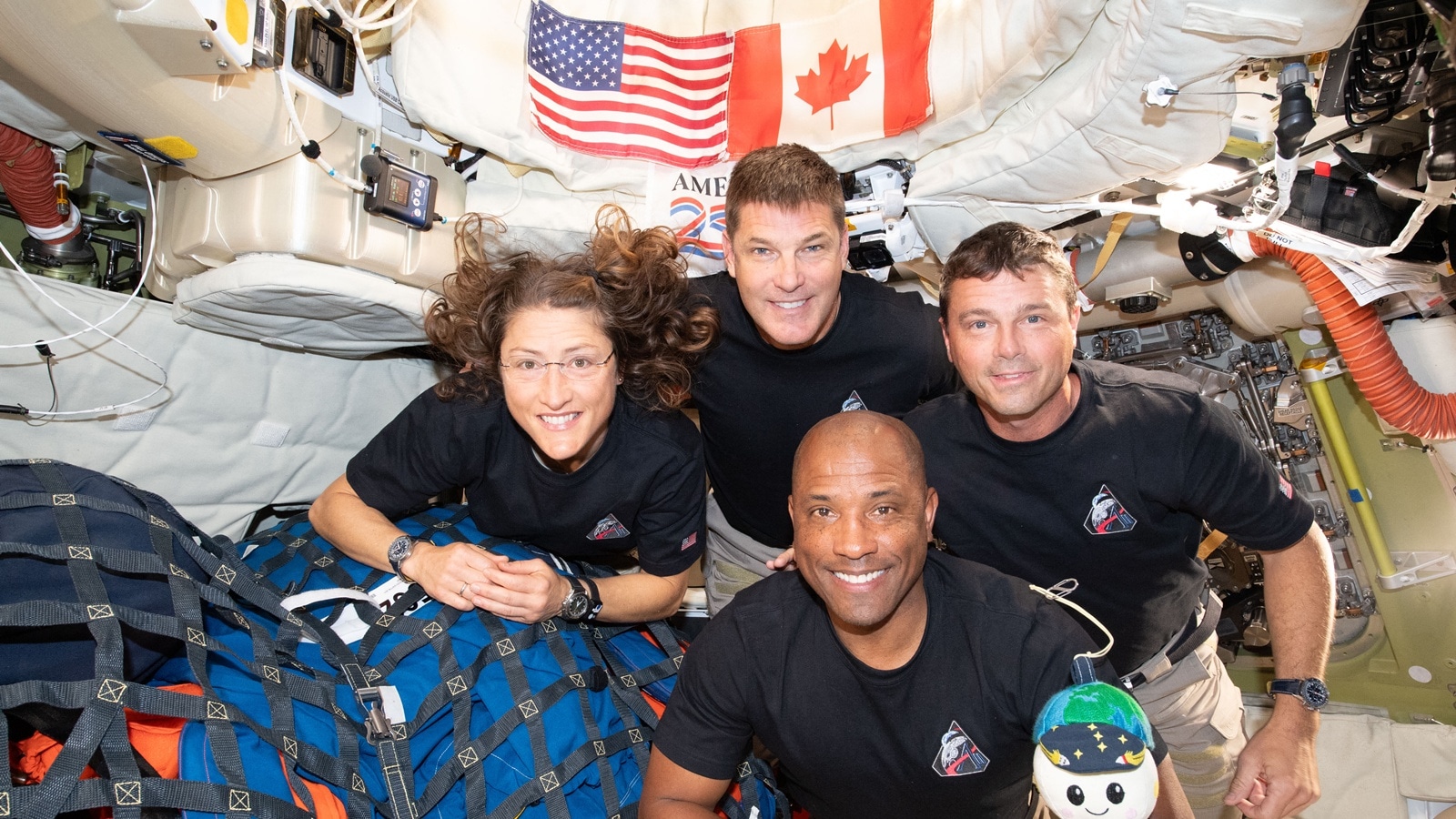
Reid Wiseman, Victor Glover, Christina Koch, and Jeremy Hansen are currently training for a moment that will redefine their relationship with gravity. We often think of space travel as an upward journey—the violent rumble of the SLS rocket, the escape from the atmosphere, the silent glide toward the lunar horizon. But the most dangerous part of the Artemis 2 mission isn’t the 238,000-mile trip to the Moon. It is the final few minutes. It is the moment the Orion capsule hits the atmosphere at 25,000 miles per hour.
At that speed, the air doesn't move out of the way. It compresses. It screams.
The heat shield will face temperatures of roughly 2,700°C (about 5,000°F). To put that in perspective, that is half as hot as the surface of the sun. Inside that tiny pod, protected by a layer of ablative material that chars and falls away by design, four humans will be hurtling toward the Pacific Ocean. They aren't just passengers; they are subjects in a high-stakes experiment regarding what the human body can endure when the world starts pushing back.
The Suit That Fights the Blood
When the Artemis 2 crew splashes down, they won't just be dealing with the adrenaline of survival. They will be fighting a physiological collapse.
Think about the last time you stood up too quickly after lying down for an hour. Your head swims. Your vision blurs. Now, imagine you haven't felt the weight of your own arms for ten days. In the microgravity of deep space, the human body undergoes a radical shift. Fluid that usually sits in your legs migrates to your head, giving you a puffy face and a stuffy nose. Your heart, no longer needing to pump blood against the constant pull of Earth, begins to change shape. It gets "lazy." Your veins, usually taut and ready to push blood upward, lose their tone.
The moment the Orion capsule hits the atmosphere and begins to decelerate, gravity returns with a vengeance. It doesn't just return to normal; the crew will feel several times their own body weight pressing them into their seats.
This is where the G-suit comes in.
For the first time in the Artemis program, the crew will be wearing these specialized "gravity suits" during the reentry and splashdown phase. They are not the bulky, cinematic white suits you see during a spacewalk. These are sleek, pressurized garments designed to do one thing: squeeze. As the capsule slows down and the Earth begins to pull the blood out of the astronauts' brains and into their legs, the suit’s internal bladders inflate. They grip the calves, the thighs, and the abdomen. It is a mechanical hug of life, forcing the blood to stay where the brain can use it. Without it, the crew would likely black out before they even hit the water.
2,700 Degrees of Separation
The physics of reentry is a lesson in the conservation of energy. All that kinetic energy gathered from a trip around the Moon has to go somewhere. It turns into heat.
The Orion capsule is equipped with an Avcoat heat shield, a material that has its roots in the Apollo era but has been refined for the modern age. As the capsule descends, the Avcoat doesn't just sit there. It undergoes a process called pyrolysis. It burns. It creates a boundary layer of cooler gas that helps insulate the spacecraft from the inferno just inches away.
Inside, the crew will hear the roar of the wind, a sound that hasn't been heard for over fifty years by anyone traveling from the Moon. They will see the orange and pink glow of ionized plasma dancing outside the small windows. It is a terrifyingly beautiful sight, a reminder that they are essentially a man-made meteor.
The stakes are invisible but absolute. If the angle of entry is too steep, the G-forces will crush the crew. If it is too shallow, they will skip off the atmosphere like a stone across a pond, lost to the void of space forever. The "corridor" they must hit is incredibly narrow. It requires a level of precision that makes a needle-in-a-haystack search look easy.
The Disorienting Return
When the parachutes finally deploy—three massive red-and-white canopies blooming like flowers against the blue sky—the violence doesn't end. It just changes.
The splashdown is often described as a "controlled car crash." The capsule hits the water with a massive thud, and then the real struggle begins. These four individuals, who have spent days in the pristine, weightless environment of space, are suddenly tossed into the swells of the Pacific.
The motion sickness is often immediate and profound. Your inner ear, which has had no "up" or "down" for over a week, is suddenly bombarded with the rhythmic swaying of the ocean. The smell of burnt heat shield and sea salt fills the cabin.
This is why the G-suits are vital even after the motion stops. The crew must remain conscious and alert to perform the egress procedures. They have to communicate with the recovery teams on the USS San Diego. They have to be ready to climb out if an emergency arises. But their bodies are telling them to collapse. Their hearts are struggling to adjust to the 1G environment. Their muscles feel like lead.
Why the Heat Matters
You might wonder why we are doing this now. Why return to the Moon after half a century? Why subject these four people to the 2,700-degree gauntlet?
The answer lies in the data. Artemis 2 is a bridge. It is the first time humans will leave Earth's orbit since 1972. It is the test bed for the technologies that will eventually take us to Mars. On a Mars mission, the reentry speeds will be even higher, the heat even more intense, and the physiological toll of long-term weightlessness even more severe.
Every drop of sweat inside those G-suits, every char mark on the Orion's base, and every beat of Christina Koch’s heart as she readjusts to the weight of her own skin is a data point. We are learning how to live in the deep dark, but more importantly, we are learning how to come back from it.
The astronauts know the risks. They have seen the simulations. They have felt the G-forces in the centrifuges. But a simulation can't replicate the smell of the ionized air or the bone-deep knowledge that you are separated from a 2,700°C death by a few inches of high-tech resin.
The Long Road to the Pacific
The recovery teams are already practicing. In the waters off the coast of San Diego, Navy divers and NASA engineers are perfecting the "porpoising" technique—catching a bobbing 20,000-pound capsule and winching it into the well deck of a ship. It is a delicate dance of heavy machinery and human intuition.
They have to account for the weather, the sea state, and the health of the crew. If an astronaut is struggling with the transition back to gravity, the recovery must be even more surgical. The G-suits will stay on until the crew is safely out of the capsule, a pressurized armor against the crushing reality of Earth.
We focus on the launch because it is loud and triumphant. It represents our ambition. But the splashdown represents our fragility. It is the moment we admit that for all our technology and all our fire, we are still biological creatures tied to a specific atmospheric pressure and a specific gravitational constant.
When the hatch finally opens and the fresh sea air hits the crew, the mission will be over. But for Wiseman, Glover, Koch, and Hansen, the journey back to themselves will just be beginning. They will have to learn how to walk again, how to hold their heads up, and how to live with the memory of the fire they rode through to get home.
The G-suits will be peeled off, the sensors will be detached, and the charred capsule will be hauled away to be poked and prodded by engineers. All that will be left is the quiet realization that we went to the stars and, despite the heat, we managed to stay human.
The ocean will be calm, the sun will be setting, and four people will finally be heavy again.