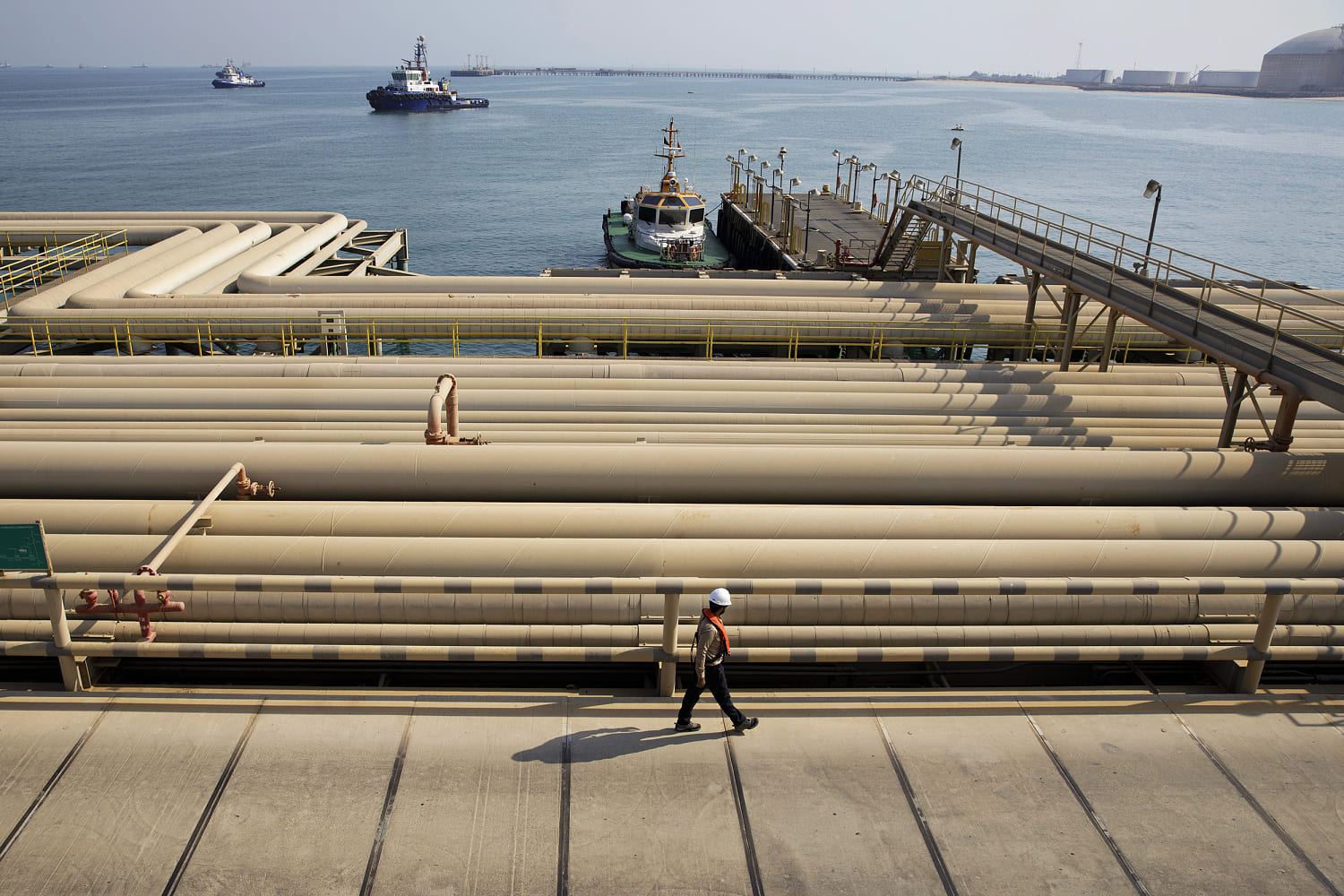
The United Arab Emirates is no longer playing the role of the quiet junior partner in the Middle East. For decades, the global energy markets viewed Abu Dhabi through the lens of its relationship with Riyadh—a reliable, if somewhat secondary, vote within the OPEC+ bloc. That era is dead. By aggressively expanding its production capacity while the rest of the cartel preaches restraint, the UAE has effectively declared its independence from the old guard of energy politics. This is not a sudden fit of pique or a personality clash between monarchs. It is a cold, calculated bet on the end of the fossil fuel era. The UAE has realized that if the world is eventually going to stop buying oil, they need to sell every single barrel they have as quickly as possible.
The Death of the Long Game
In the traditional OPEC playbook, the goal was price stability through scarcity. You hold back supply to keep the price high, ensuring a steady stream of revenue for decades. Saudi Arabia remains the primary architect of this philosophy. But the UAE, often referred to as "Little Sparta" for its outsized military and diplomatic influence, has crunched different numbers. They see a world where carbon taxes, electric vehicles, and renewable energy targets create a hard ceiling on future demand.
If you own an asset that will be worth zero in fifty years, your only rational move is to liquidate it now. Abu Dhabi is currently spending $150 billion to boost its production capacity to five million barrels per day by 2027. This isn't about meeting current demand; it's about seizing market share before the window slams shut. They are trading the long-term dream of permanent oil wealth for the immediate reality of a massive cash pile used to build a post-oil economy.
Breaking the Saudi Orbit
The friction within OPEC+ isn't just about quotas. It’s about identity. For years, the UAE followed the Saudi lead because their interests aligned. Both wanted high prices to fund domestic transformations. However, the UAE’s transformation is further along than Saudi Arabia’s Vision 2030. Dubai is already a global hub for finance and tourism; Abu Dhabi has a sophisticated sovereign wealth fund infrastructure that rivals any on earth.
The UAE doesn't need $100 oil to keep the lights on the way some of its neighbors do. Their "break-even" price is lower, and their patience for production cuts is thinner. When Abu Dhabi pushed for a higher production baseline in 2021, it wasn't a clerical request. It was a shot across the bow. They were telling the world that they would no longer sacrifice their own industrial growth to subsidize the fiscal deficits of other member states.
The Murban Factor
A critical, often overlooked tool in this rebellion is the Murban crude futures contract. By launching a regional benchmark traded on an exchange in Abu Dhabi, the UAE shifted how its oil is priced and sold. They moved away from the opaque, retroactive pricing models used by other Gulf producers toward a transparent, market-driven system.
- Market Transparency: Buyers can hedge risk more effectively.
- Price Discovery: The market, not a ministry, determines what the oil is worth.
- Financial Integration: It links Abu Dhabi directly to global financial centers in London and New York.
This move essentially "financialized" Emirati oil. It made their crude more attractive to global traders and signaled that the UAE wants to be the most sophisticated operator in the room, not just a pumper of raw materials.
The Infrastructure of Defiance
To understand the scale of this shift, look at the physical changes on the ground. ADNOC (Abu Dhabi National Oil Company) has been transformed from a sleepy state bureaucracy into a lean, aggressive corporation that mirrors the behavior of Western supermajors. They are bringing in foreign investment at an unprecedented rate, selling stakes in their pipelines and drilling units to global private equity firms.
This serves two purposes. First, it brings in immediate capital. Second, it creates a "shield" of international vested interests. When BlackRock or KKR has a multi-billion dollar stake in your energy infrastructure, your national security and economic stability become a priority for the global elite.
The UAE is also pivoting toward natural gas and blue hydrogen. They are not just betting on oil; they are betting on being the "last man standing" in the entire hydrocarbon space. By investing in carbon capture and storage (CCS), they aim to produce the "cleanest" possible barrel of oil. In a world of tightening ESG regulations, the UAE wants to ensure that when a refinery in Europe or Asia has to choose between a barrel of "dirty" oil and a "low-carbon" Emirati barrel, the choice is easy.
The Geopolitical Cost of Going Alone
Independence is expensive. By diverging from the Saudi-led consensus, the UAE has introduced a level of volatility into the Gulf’s primary diplomatic engine. The relationship between UAE President Sheikh Mohammed bin Zayed and Saudi Crown Prince Mohammed bin Salman is often analyzed through the lens of "sibling rivalry," but that trivializes the stakes. These are two leaders with competing visions for who should be the economic gravity center of the Middle East.
Saudi Arabia has responded by introducing new rules that require multinational companies to move their regional headquarters to Riyadh if they want to win government contracts. This is a direct attack on Dubai’s dominance. The UAE, in turn, has doubled down on its own trade deals, signing Comprehensive Economic Partnership Agreements (CEPAs) with countries like India, Indonesia, and Israel, bypassing the GCC’s collective bargaining framework.
The Efficiency Trap
The danger for the UAE is that their rush to the exit might trigger a "race to the bottom" in oil prices. If every producer decides to pump at maximum capacity to capture the remaining years of demand, the market will be flooded.
$$\text{Total Revenue} = \text{Price per Barrel} \times \text{Volume}$$
The math is simple: if the price drops faster than you can increase your volume, you lose. The UAE is gambling that their low extraction costs—among the lowest in the world—will allow them to survive a price war that would bankrupt competitors in Russia, Africa, and even parts of the United States. They are not trying to keep the price high; they are trying to be the most efficient producer in a low-price environment.
Diversification or Desperation
Critics argue that the UAE is moving too fast and risking the stability of the very markets they depend on. But from the perspective of an Abu Dhabi strategist, the real risk is moving too slowly. The "Little Sparta" moniker applies here as much to their economic policy as it does to their military. It is a philosophy of preemptive strike.
They have seen what happens to resource-rich nations that fail to adapt. They watched the coal industry collapse and saw how quickly "stranded assets" can destroy a balance sheet. By the time the world truly moves on from oil, the UAE intends to have already used its last drop of crude to cement its position as a global leader in finance, technology, and logistics.
The tension within OPEC+ is no longer a temporary disagreement over quotas. It is the friction of a tectonic shift. The UAE has realized that the collective's interests are no longer its own. While the rest of the cartel tries to hold back the tide of the energy transition, Abu Dhabi is busy building a fleet of ships to sail on it. They are betting that in the final act of the oil age, loyalty to a cartel is a liability, and speed is the only thing that matters.
The era of the "monolithic Gulf" is over. We are now in a period of fierce regional competition where the winner is whoever can pivot the fastest. For the UAE, "going its own way" isn't a choice; it's a survival strategy.
Abu Dhabi’s endgame is to ensure that when the last oil well on earth finally stops pumping, the person turning the valve is an Emirati, and the profit from that final barrel is already invested in a thousand industries that have nothing to do with the ground.