Civilization is failing when we have to rely on the sudden, unscripted courage of a man with a bollard to keep a shopping mall from becoming a morgue.
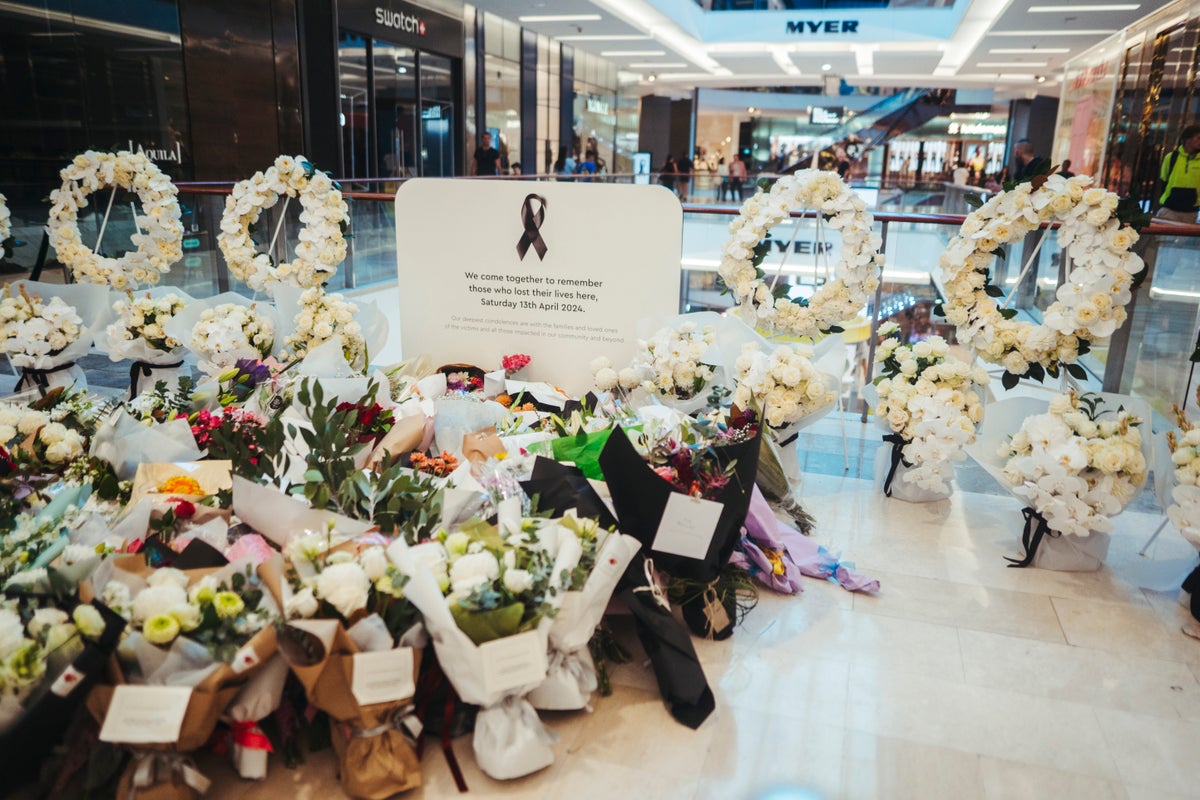
The Australian government’s decision to award bravery medals to eight individuals for their actions during the Bondi Junction stabbing is the ultimate PR distraction. It is a feel-good sedative designed to stop you from asking why the "safest country in the world" requires its citizens to act like gladiators in their Sunday best. We are obsessed with the aesthetics of heroism because we are terrified of the logistics of incompetence. In other updates, take a look at: Operational Degasification and Tactical Erosion in the Lake Chad Basin.
When we hand out medals, we aren't just honoring the brave. We are formalizing the privatization of public safety. We are signaling that the state’s primary defense mechanism is no longer prevention or rapid tactical response, but the hope that a few bystanders happen to have a high enough adrenaline threshold to play human shield.
The Myth of the "Inspirational" Tragedy
The competitor narrative is predictable. They tell you these eight people represent the "best of us." They talk about the "Bondi Spirit." They lean into the emotional resonance of strangers helping strangers. The Washington Post has analyzed this critical subject in extensive detail.
This is a lazy consensus. It frames the event as a triumph of the human spirit rather than a catastrophic failure of the social contract.
Real bravery is a biological anomaly, not a policy. By focusing on the medals, the media avoids the uncomfortable data regarding the response times and the glaring holes in psychiatric surveillance. We celebrate the "bollard man" because it’s easier than discussing the $4 billion annual shortfall in mental health funding or the fact that shopping centers have become soft targets with security guards who are legally prohibited from doing anything more than "observing and reporting."
I have spent years analyzing risk management in high-density environments. The pattern is always the same:
- A systemic failure occurs.
- An individual performs a miracle to mitigate the damage.
- The institution pivots to celebrate the individual.
- The systemic failure is never addressed.
We are treating bravery as a renewable resource. It isn’t. Every time we rely on a civilian to intercept a blade, we are admitting that the official structures of protection have already collapsed.
The False Equivalence of Bravery Awards
There is a fundamental difference between professional bravery and civilian bravery, and our current award system creates a dangerous blur.
A police officer is trained, equipped, and legally mandated to run toward the scream. When Inspector Amy Scott took down the assailant, she performed her duty with incredible precision. But when we lump her actions into a generic "bravery" category alongside civilians, we diminish the specific, tactical excellence of her intervention.
Conversely, when we award civilians, we are essentially rewarding a lack of self-preservation. It sounds harsh, but from a public health and safety perspective, we should not be encouraging people to fight armed attackers with plastic chairs.
- Scenario A: A bystander flees, lives, and provides a perfect witness statement.
- Scenario B: A bystander fights, gets lucky, and becomes a national hero.
- Scenario C: A bystander fights, dies, and becomes a tragic footnote.
By awarding Scenario B, the government implicitly pushes citizens toward Scenario C. We are incentivizing "Main Character Syndrome" in high-stakes environments where the smartest move—for the individual and the collective—is usually evacuation.
The Security Theater of Shopping Malls
Let's talk about the environment itself. Bondi Junction, like most major Australian malls, is an architectural trap. These spaces are designed for maximum consumer friction and minimum exit efficiency.
We have spent three decades turning our public squares into private, high-walled commercial enclosures. In exchange for this privatization, the owners of these spaces and the government that regulates them owe the public a standard of safety that goes beyond a "no smoking" sign and a map of the food court.
The bravery of the Bondi eight highlights the total inadequacy of contemporary security protocols. Most security guards in these precincts are paid slightly above minimum wage. They are given high-vis vests that act as targets and zero tools to handle a violent psychotic break.
The "contrarian" truth? If you want to honor the victims, stop building monuments and start mandating tactical response teams for every "Tier 1" shopping precinct. But that costs money. Medals are cheap. Medals are just pieces of stamped metal that buy a week of positive headlines.
The Psychological Cost of Heroism
We love to watch the medal ceremony, but we rarely look at the aftermath. True heroism is often followed by profound, life-altering PTSD.
By centering the narrative on the "glory" of the award, we ignore the crushing weight of the experience. Many of these recipients will struggle with the "What if?" for the rest of their lives. They will replay the moment they chose to step forward—and the moments they couldn't save everyone.
The government uses these ceremonies to "close the chapter." It provides a sense of finality that the survivors don't actually feel. It’s a performative ritual that satisfies the public’s need for a happy ending in a story that is fundamentally a horror movie.
Moving Beyond the "Bollard" Solution
If you find yourself in a situation where your life depends on a stranger with a bollard, you are already in a failed state.
We need to stop asking "How can we be more like these eight people?" and start asking "Why was it left to them?"
- Mental Health Intervention: The assailant was known to authorities. The system didn't just "miss" him; it let him walk through the cracks because the cracks are now wider than the floor.
- Security Reform: If a space is large enough to hold 10,000 people, it should be required to have on-site, armed response capability. Anything less is negligence masquerading as "civility."
- Architectural Accountability: We need to rethink how these malls are built. Open spaces, clear sightlines, and rapid-exit technology are more important than a fancy atrium.
The bravery at Bondi was a miracle. But miracles are not a policy. Relying on the extraordinary courage of ordinary people is a sign of systemic rot. We are currently cheering for the people who jumped into the water to save the drowning, while the people who built the bridge with holes in it are the ones handing out the medals.
Stop falling for the ceremony. The medals aren't a tribute to our strength; they are an indictment of our preparation.
Next time, there might not be a man with a bollard. Then what?
Accept the medals, yes. Honor the names, absolutely. But do not let the glitter of the ceremony blind you to the fact that you are being asked to provide your own protection in a world that took your tax money and promised to keep you safe.
True safety doesn't need heroes. It needs a system that works so well that heroes are redundant. Every time we award a medal for bravery in a shopping mall, we are admitting that the system has died.
Go to the mall. Shop. Eat. But keep one eye on the exit. Because the state has made it very clear: your survival is now a matter of your own personal courage, not their professional competence.