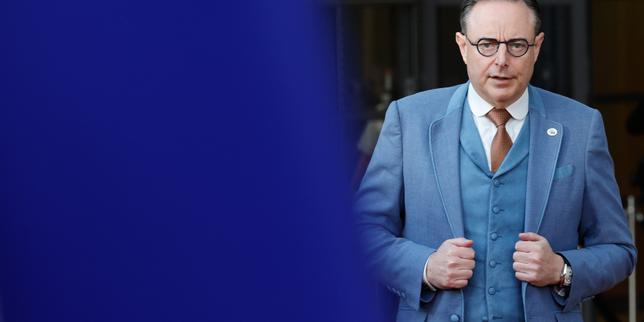
The press loves a simple villain. It’s easy to paint Belgian Prime Minister Alexander De Croo’s nuanced diplomacy as "ambivalence" or, worse, a "troubling" flirtation with Moscow. That narrative is lazy. It’s the product of armchair geopolitics that ignores the cold, hard mechanics of energy security and the brutal reality of the European industrial core.
While the media clutches its pearls over diplomatic optics, they miss the point entirely. Belgium isn’t being "ambivalent." Belgium is being a survivor. In a continent currently de-industrializing at a record pace to satisfy ideological purity, De Croo is playing a high-stakes game of economic preservation.
The Myth of Moral Purity in Energy
Every critic pointing a finger at Brussels for maintaining open channels or resisting certain "scorched earth" sanctions is likely typing their outrage in a room heated by shifted Russian gas or powered by a grid that would collapse without the stabilizing force of traditional trade flows.
The "lazy consensus" suggests that a total, instantaneous break from Russian resources is the only moral path. It’s a fairy tale.
I have seen policy analysts in Brussels scream for total embargoes while their own ministries quietly sign waivers for essential industrial components. Belgium’s "ambivalence" is actually transparency. De Croo is simply refusing to participate in the grand European theater of saying one thing in a press release and doing another in the port of Antwerp.
Let’s look at the numbers. Belgium’s chemical sector—the second-largest in the world per capita—requires feedstocks that don't just appear out of thin air because you posted a flag on social media.
- Natural Gas Dependence: Despite the push for LNG, the infrastructure lag is real.
- Nuclear Reality: Belgium's U-turn on nuclear phase-outs wasn't a change of heart; it was a surrender to physics.
- Refining Capacity: Antwerp is the lung of Europe’s heavy industry. If you choke that lung to prove a political point, the heart—Germany—stops beating.
The Sanctions Trap
We are told that sanctions are a precision tool. They aren't. They are a sledgehammer that often hits the person swinging it harder than the target.
The critics call it "weakness" when De Croo questions the efficacy of further symbolic bans. I call it fiduciary duty. The primary job of a Prime Minister is to ensure his citizens don't freeze and his country's businesses don't go bankrupt.
Imagine a scenario where Belgium followed the most radical hawks. The port of Antwerp loses 20% of its volume overnight. The chemical plants shutter. Thousands of high-wage jobs vanish. Does the war stop? No. The flow simply redirects through intermediaries in India or Turkey, and the Belgian taxpayer pays a 400% markup for the same molecules.
De Croo understands what the "moralists" ignore: Geopolitics is a game of endurance, not a sprint of virtue signaling.
Diplomacy is Not Endorsement
There is a dangerous trend in modern political discourse where talking to an adversary is equated with treason. This is the death of diplomacy.
The criticism leveled at the Belgian government suggests that any line of communication left open is a "troubling" sign of Russian influence. This is a fundamental misunderstanding of Belgium’s historical role as the Carrefour de l'Europe.
Brussels exists as a neutral ground not because it lacks conviction, but because it understands that someone has to keep the lights on when the shouting stops. By maintaining a pragmatic stance, De Croo ensures that Belgium remains a necessary actor rather than a sidelined ideologue.
The Diamond Distraction
The media fixates on the Antwerp diamond trade as if it’s the secret lever of the Kremlin’s war machine. It’s a convenient, sparkly distraction.
The obsession with banning Russian diamonds is the perfect example of "feel-good" policy that achieves zero strategic gain. If Antwerp closes its doors to these stones, they don't disappear from the market. They go to Dubai. They go to Mumbai. The trade continues, the revenue still flows to Moscow, but Europe loses its only seat at the table to regulate and track those flows.
Stopping a trade you can control only to hand it over to an entity that doesn't care about your sanctions is not "leadership." It is strategic suicide.
Why Realism is the New Counter-Culture
We live in an era where admitting that your economy relies on an adversary is considered "scandalous."
De Croo is being dragged through the mud because he is one of the few leaders unwilling to lie to his electorate about the costs of a total decoupling. The "troubling ambivalence" cited by competitors is actually the sound of a leader weighing the lifeblood of his nation against the fleeting approval of a Brussels press corps that doesn't have to worry about the price of industrial electricity.
The status quo demands total ideological alignment. But alignment doesn't keep the furnaces hot.
Belgium’s stance isn't a betrayal of European values. It is a defense of European survival. While other nations hollow out their industrial base to satisfy a 24-hour news cycle, Belgium is protecting the infrastructure that will be required to rebuild the continent when the dust settles.
Stop asking why De Croo won't fall in line. Start asking why everyone else is so eager to jump off a cliff without a parachute.
Don't mistake a refusal to commit economic hara-kiri for a lack of resolve.