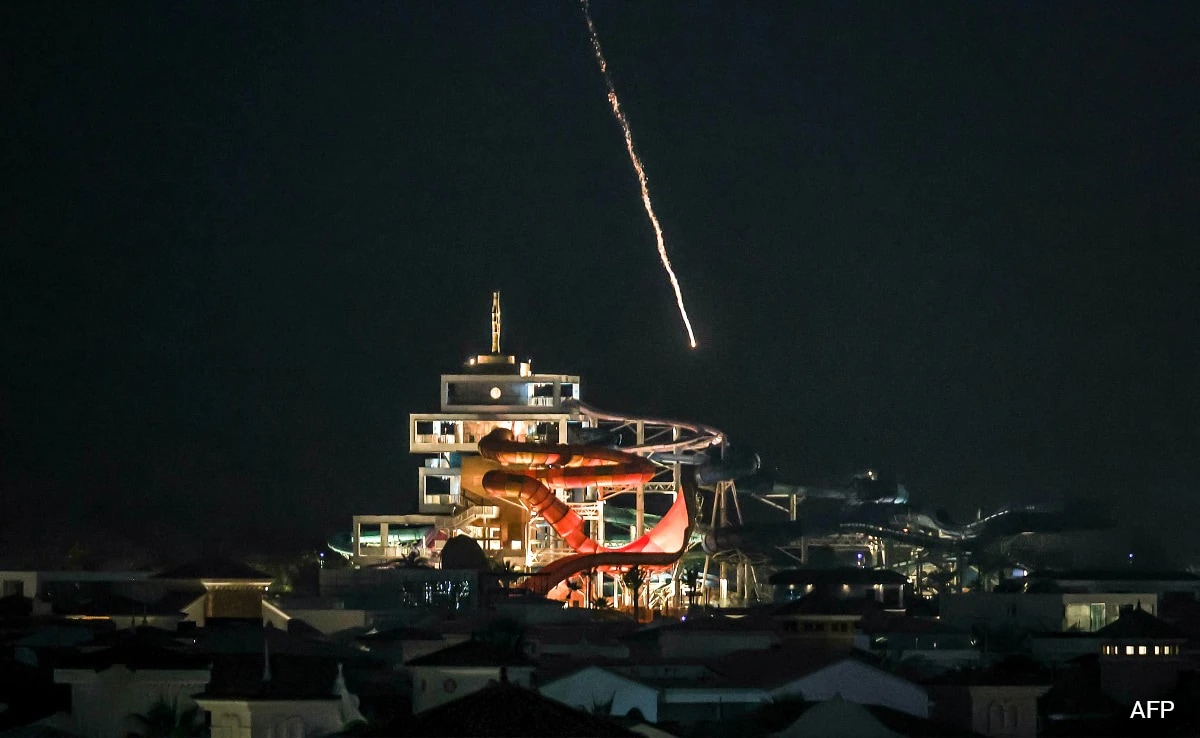
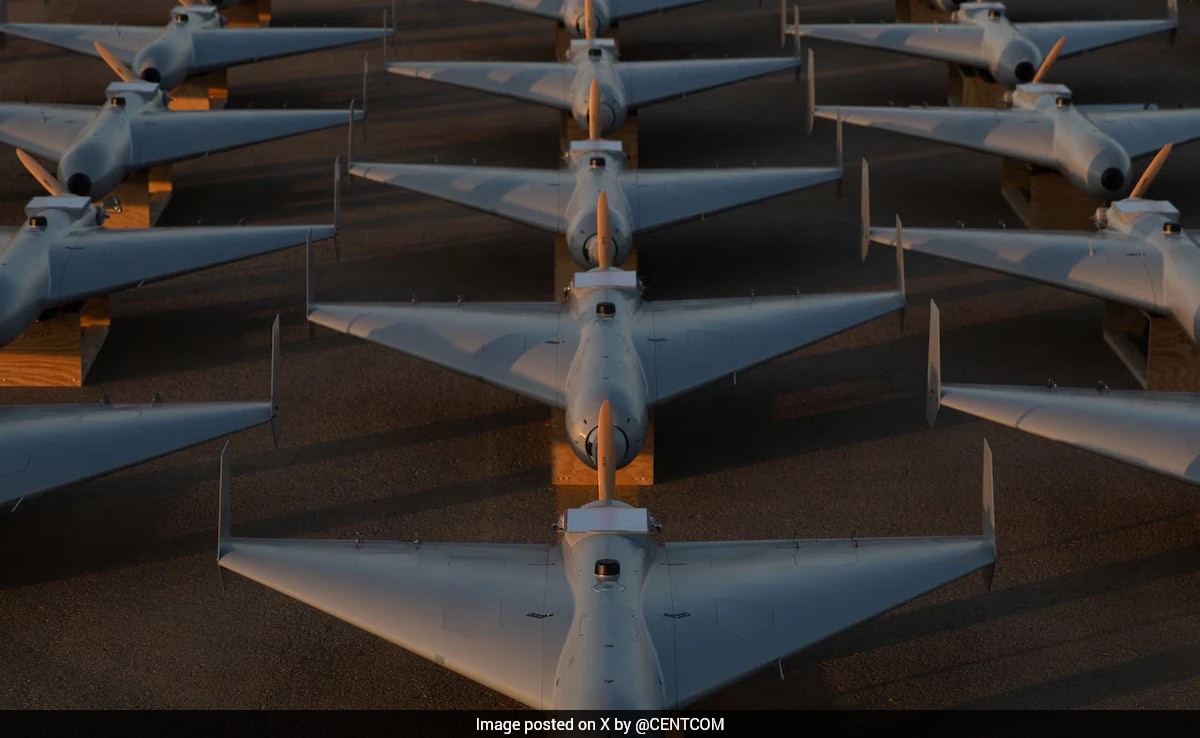
The geography of Middle Eastern security is defined by the intersection of ballistic physics and economic dependencies. While sensationalist reporting focuses on "horror maps," a rigorous analysis reveals that Iran’s missile program is not a singular threat but a multi-tiered system of regional denial. This system functions through a specific cost-benefit logic: the ability to hold high-value civilian infrastructure and Western-aligned economic hubs—specifically major holiday destinations—at risk without initiating full-scale kinetic warfare. Understanding the actual reach of this arsenal requires moving beyond radius lines on a map and into the mechanics of circular error probable (CEP), payload trade-offs, and the saturation of integrated air defense systems (IADS).
The Three Tiers of Ballistic Reach
Iranian missile capability is categorized by the physical limitations of liquid and solid-fueled propulsion. Each tier serves a distinct strategic objective and targets a specific set of economic vulnerabilities. Learn more on a connected subject: this related article.
1. Tactical and Short-Range Ballistic Missiles (SRBMs)
These systems, such as the Fateh-110 and its variants, operate within a 300km to 700km range. Their primary function is the suppression of immediate border threats and the targeting of maritime traffic in the Strait of Hormuz. For the travel industry, this tier creates a permanent risk profile for transit hubs in the United Arab Emirates and Northern Oman. The high maneuverability of these solid-fuel missiles reduces the "launch-to-impact" window, making traditional interception significantly more difficult for localized defense batteries.
2. Medium-Range Ballistic Missiles (MRBMs)
The Shahab-3 and Zolfaghar variants extend the operational theater to 1,000km–2,000km. This is the "Tourism Critical" zone. It encompasses the entirety of the Levant, the Arabian Peninsula, and parts of the Eastern Mediterranean. The precision of these systems has shifted from city-sized targets to specific infrastructure nodes. A missile with a CEP (Circular Error Probable) of 10-50 meters can effectively shutter an international airport or a desalination plant, which are the lifeblood of desert-based tourism economies like Dubai or Doha. More journalism by Ars Technica highlights related perspectives on the subject.
3. Intermediate-Range and "Hypersonic" Aspirations
The Khorramshahr and the recently unveiled Fattah systems represent the 2,000km+ capability. At these distances, the target set expands to include Southeast Europe and East Africa. While the technical veracity of "hypersonic" claims—defined as atmospheric maneuverability at speeds exceeding Mach 5—is debated by Western analysts, the psychological effect on Mediterranean travel markets is quantifiable. The mere existence of a theoretical flight path to holiday hotspots in Greece, Cyprus, or Turkey forces a reassessment of sovereign risk premiums for hospitality investors.
The Economic Fragility of Holiday Hotspots
Four specific regions—Dubai, Cyprus, Turkey, and Egypt—stand as the primary intersections of Iranian reach and Western leisure capital. The vulnerability of these locations is not merely physical; it is a matter of insurance mathematics and perception.
The Dubai and Abu Dhabi Corridor
The UAE represents the most concentrated density of high-value targets within easy reach of Iranian SRBMs and MRBMs. The economic model of the Emirates relies on a "safe haven" status. Ballistic threats disrupt this by:
- Increasing K&R (Kidnap and Ransom) and War Risk Insurance: As soon as a region is mapped within a credible strike zone, the cost of operating aircraft and cruise ships increases exponentially.
- Supply Chain Chokepoints: A strike on the Jebel Ali port or Dubai International Airport (DXB) would not just halt tourism; it would sever the primary logistics artery between Europe and Asia.
The Eastern Mediterranean Buffer (Cyprus and Greece)
Cyprus, specifically the British Sovereign Base Areas (SBAs) like Akrotiri, sits at the edge of the 1,500km range. While often viewed as a "safe" European retreat, its proximity to the Levant makes it a secondary casualty of regional escalation. The mechanism of risk here is "collateral airspace closure." During periods of heightened ballistic activity, the Eastern Mediterranean flight corridors become high-risk zones, leading to mass cancellations regardless of whether a missile is aimed at a beach resort.
The Red Sea and Suez Nexus (Egypt)
Egypt’s Sinai Peninsula and the Red Sea Riviera (Sharm El-Sheikh) are vulnerable to both Iranian-manufactured assets and their proxy-deployed equivalents. The "cost function" for Egypt is the most severe because its economy lacks the diversification of the UAE. A single kinetic event in the Red Sea correlates to a double-digit percentage drop in Suez Canal revenue and tourism receipts within a 30-day window.
Technical Constraints: Precision vs. Range
A common fallacy in missile range analysis is the assumption that a missile can carry its maximum payload to its maximum range simultaneously. The physics of the Rocket Equation dictates a harsh trade-off.
$$\Delta v = v_e \ln \frac{m_0}{m_f}$$
In this equation, where $m_0$ is the initial mass (including fuel) and $m_f$ is the final mass (after fuel is spent), any increase in the warhead weight (part of $m_f$) necessitates a decrease in the total velocity change ($\Delta v$), thereby shortening the range. To reach holiday destinations in Southern Europe, Iranian engineers must lighten the payload. This reduces the destructive yield, shifting the threat from "total destruction" to "operational harassment."
However, for a tourism-dependent economy, operational harassment is sufficient for collapse. A "soft kill" on an airport—damaging runways or fuel farms rather than leveling terminals—achieves the same economic outcome of halting all arrivals.
The Saturation Paradox in Air Defense
The presence of Patriot (PAC-3), THAAD, and Iron Dome systems provides a layer of protection, but these systems face a mathematical bottleneck known as Saturation.
- Interceptor Depletion: An interceptor missile (like the RIM-161 SM-3) is significantly more expensive than the ballistic missile it targets. An aggressor can launch "salvo" attacks using older, cheaper missiles to force the defender to deplete their inventory of sophisticated interceptors.
- Sensor Overload: IADS (Integrated Air Defense Systems) must track, identify, and assign a solution to every incoming object. In a high-volume launch scenario, the probability of a "leaker" (a missile that bypasses the screen) increases as the system's processing capacity is taxed.
- Debris Risk: Even a successful interception at a low altitude results in ballistic debris. For a densely populated tourist hub, falling wreckage can be as lethal as a direct hit, creating a "no-win" scenario for defense commanders.
Strategic Recommendation for Risk Management
Organizations operating within the 2,500km Iranian strike radius must move beyond standard contingency planning. The current geopolitical reality dictates a shift toward elastic operational models.
Investors and travel operators should prioritize the following:
- Diversification of Transit Nodes: Establishing secondary logistics hubs outside the primary 1,000km "precision strike" zone to ensure continuity if primary hubs like DXB or DOH are compromised.
- Real-Time War Risk Assessment: Moving from annual insurance renewals to dynamic, data-fed premiums that reflect the current readiness levels of regional missile batteries.
- Infrastructure Hardening: Transitioning critical utilities (water, power) for luxury developments to decentralized, subterranean, or modular systems that can survive "soft kill" scenarios on the primary grid.
The strategic play is not to avoid the region—the economic opportunity is too high—but to price the ballistic risk into the base cost of capital. The "horror map" is a static image; the actual threat is a fluid equation of physics, finance, and the relentless pursuit of regional leverage. Overcoming this requires the cold application of data over the heat of alarmism.