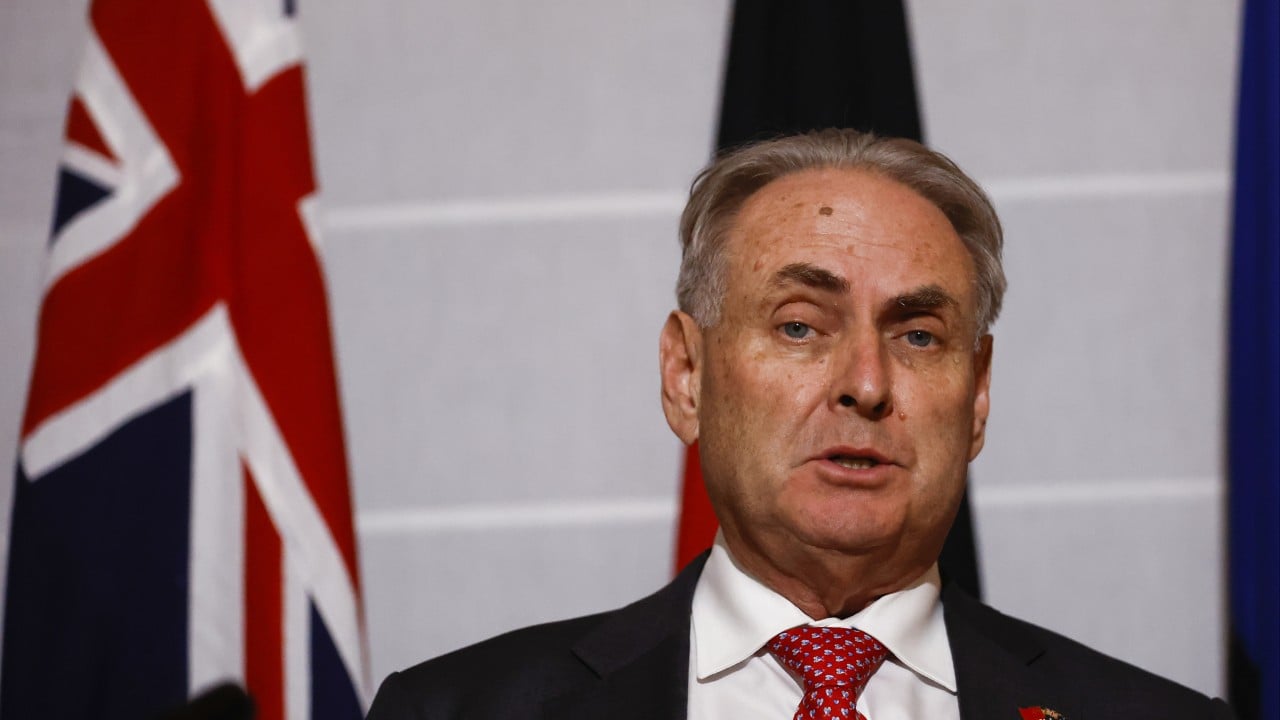
Australia’s energy security is currently dictated by a structural deficit in domestic refining capacity, leaving the nation reliant on a fragile trans-Pacific supply chain that is highly sensitive to Middle Eastern instability. The Trade Minister’s mission to Beijing represents a calculated geopolitical arbitrage: securing diversified fuel inputs from Chinese mega-refineries to offset the supply-side shock triggered by a potential kinetic conflict in the Persian Gulf. This is not merely a diplomatic visit; it is a tactical reconfiguration of the Australian fuel security framework.
The Refining Deficit and the Just-in-Time Bottleneck
The Australian fuel market operates on a razor-thin margin of safety. Following the closure of the Kwinana and Altona refineries, the nation’s domestic production capability was gutted, leaving only two operational facilities (Lytton and Geelong). This creates a structural dependency on imported refined products—specifically Diesel and Jet A-1—rather than crude oil. For a deeper dive into similar topics, we suggest: this related article.
The "Just-in-Time" inventory model used by Australian fuel distributors relies on a continuous flow of tankers. Under the Fuel Security Act 2021, the government mandates minimum stockholdings, but these reserves are insufficient to withstand a prolonged disruption of the Strait of Hormuz.
- The Persian Gulf Proxy: Approximately 15% to 20% of global oil passes through the Strait of Hormuz. A war involving Iran threatens to choke this volume, leading to an immediate surge in Brent Crude prices.
- The Refining Lag: Even if Australia sources crude from elsewhere, it lacks the throughput to refine it. The dependency moves downstream to Asian refining hubs—Singapore, South Korea, and China.
- The Sovereign Risk: Relying on Singapore alone creates a single point of failure. Diversifying toward China, which has significantly expanded its refining quotas in the last 24 months, is a hedge against regional port congestion or localized geopolitical blockades.
China’s Refining Surplus as a Geopolitical Buffer
China has transitioned from a net importer of refined products to a dominant global exporter, driven by its "Teapot" refineries and state-owned enterprises (SOEs) like Sinopec. The Australian Trade Minister’s visit targets China’s export quotas. By securing a guaranteed allocation of diesel and gasoline, Australia can bypass the spot market volatility that typically accompanies Middle Eastern conflict. To get more details on this issue, comprehensive coverage can be read on The New York Times.
The Mechanics of the Export Quota System
Beijing controls the flow of refined products through a centralized quota system. When global margins are high, China often increases these quotas to support its internal economy and expand its influence in the Asia-Pacific. For Australia, the negotiation hinges on "Security of Supply" contracts that prioritize Australian shipments during global shortages. This creates a symbiotic, albeit tense, relationship: Australia provides the iron ore and lithium critical for China’s industrial base, while China provides the refined hydrocarbons necessary to keep Australian logistics networks functional.
[Image of oil refinery process]
The Strategic Cost of the Energy Pivot
Moving closer to China for fuel security introduces a secondary layer of risk: geopolitical alignment friction. Australia’s "Step-Up" in the Pacific and its AUKUS commitments sit in direct opposition to its energy dependency on Beijing. The Trade Minister must navigate a "Trilemma" of competing interests:
- Reliability: Can China be trusted to fulfill contracts if diplomatic relations sour again?
- Cost: Chinese refined products are often cheaper due to economies of scale, but they come with a "dependency premium."
- Security: Does this pivot alienate traditional security partners like the United States, who view Chinese energy dominance as a tool of coercion?
The logic of the visit suggests that the Australian government has prioritized immediate physical liquidity—having actual fuel in tanks—over the long-term abstract risk of Chinese economic pressure. In a scenario where Iran closes the Strait, an empty fuel tank in Sydney is a more immediate threat to the government than a diplomatic dispute with Beijing.
Quantifying the Iran Conflict Impact on Australian Logistics
A conflict in the Persian Gulf would not just raise prices; it would reroute the entire global tanker fleet. This creates a "Duration of Voyage" problem.
- Route Displacement: Tankers that would normally traverse the Indian Ocean may be diverted or face prohibitively high insurance premiums (War Risk Surcharges).
- The Premium Gap: The "Singapore Crack Spread"—the difference between the price of crude oil and the refined products made from it—historically balloons during Middle Eastern crises. Australia, as a price-taker, absorbs this entire cost.
- Supply Chain Contraction: If diesel prices rise by 30% to 50%, the cost of inland freight in Australia increases exponentially, impacting everything from mining exports to supermarket shelf prices.
By engaging China now, the Trade Minister is attempting to lock in "Baseload Supply" before the global market enters a frantic bidding war.
Structural Realignment of the Liquid Fuel Emergency Act
The government’s strategy also involves a quiet update to the Liquid Fuel Emergency Act. This framework allows the Minister to seize and redirect fuel stocks during a declared emergency. However, the Act is toothless if the physical product is not within Australian territorial waters. The mission to China aims to ensure that the "Total Volume in Transit" remains high.
The strategy is to create a "rolling reserve" where tankers are constantly in the pipeline between Chinese ports and Australian terminals. This effectively turns the ocean into a floating storage facility, compensating for the lack of massive on-shore strategic petroleum reserves (SPR).
Tactical Recommendations for the Australian Energy Framework
The visit to China is a necessary short-term fix, but it exposes the fragility of the Australian energy state. To move beyond this vulnerability, the following structural shifts are required:
1. Mandatory Domestic Refining Subsidies
The government must pivot from "Fuel Security Services Payments" to a more aggressive industrial policy. This involves subsidizing the modernization of the Lytton and Geelong refineries to handle a wider variety of crude grades, reducing the dependence on specific light-sweet crudes that are often sourced from volatile regions.
2. The Trans-Tasman Strategic Reserve
Australia should lead the creation of a regional fuel reserve in partnership with New Zealand and Pacific Island nations. This would involve shared investment in high-capacity storage infrastructure, located in geographically shielded areas like the Northern Territory, away from primary maritime chokepoints.
3. Accelerated Electrification of Heavy Logistics
The most effective way to mitigate a fuel crunch is to reduce the "Diesel Intensity" of the economy. This means rapid-tracking the electrification of the heavy rail and short-haul trucking sectors. While this does not solve the immediate crisis, it reduces the "Total Addressable Risk" of a future Iran-centric shock.
The Trade Minister must secure a firm commitment on export volume guarantees that are decoupled from broader trade disputes. If Australia can secure a multi-year "Energy Corridor" agreement with China, it gains a vital buffer against the volatility of the Middle East. Failure to do so leaves the Australian economy exposed to a double-bind: the threat of Iranian-driven price shocks and the risk of Chinese-driven supply restrictions. The goal is to utilize China’s refining surplus as a shield, while simultaneously building the domestic infrastructure required to eventually discard it.