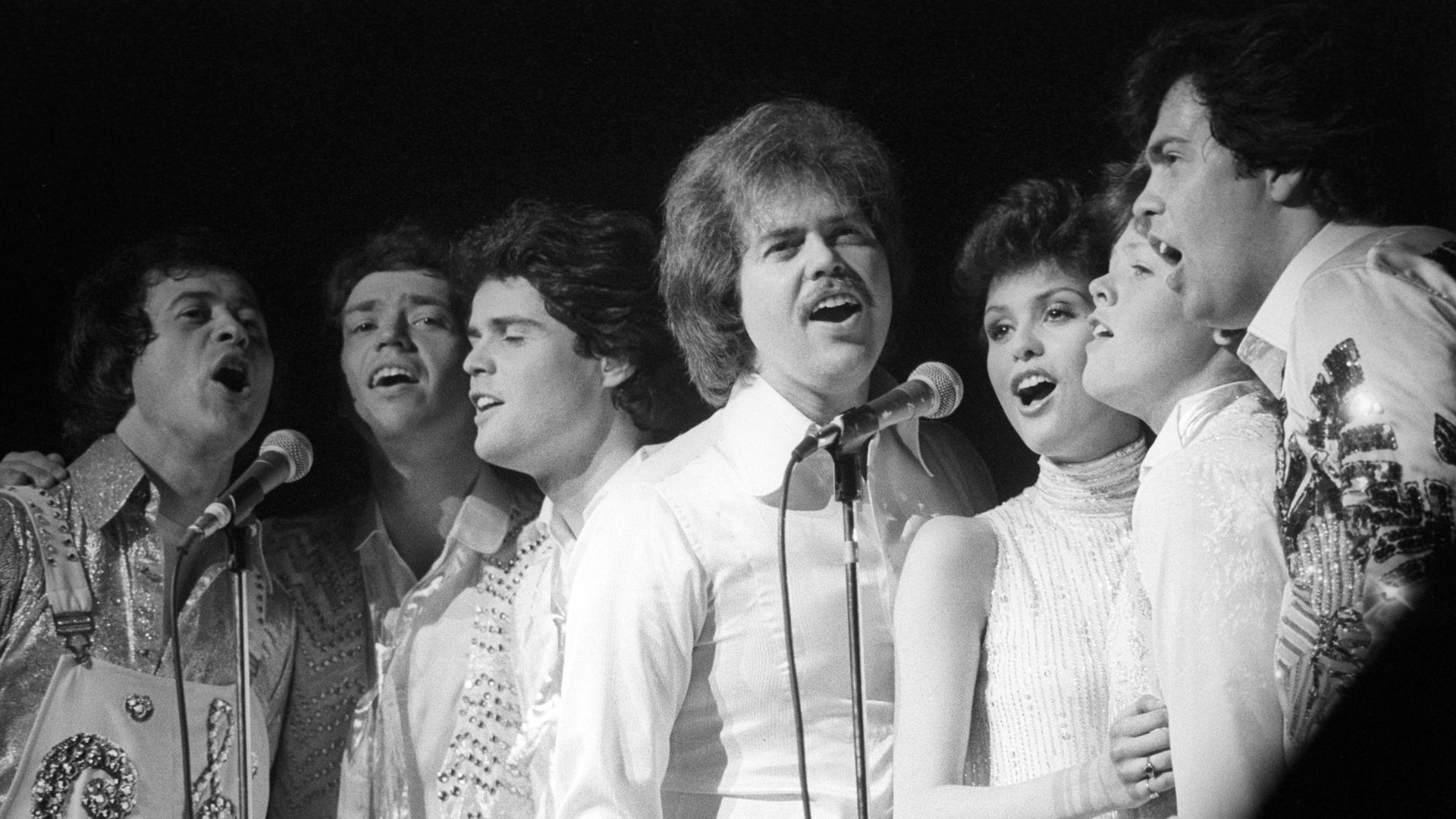
Alan Osmond was never just a pop star. While the public saw a polished, smiling face on stage, the music industry understood the reality. He was the chief executive of a massive entertainment corporation long before such branding models became standard for family acts. His passing at 76, following a decades-long confrontation with multiple sclerosis, marks the final chapter for the primary engine that drove one of the most commercially successful music groups in history.
The narrative of The Osmonds is often simplified to teen idols and bubblegum pop, but that version ignores the structural foundation Alan built. He was the eldest brother, the one who navigated the ruthless circuits of the 1960s television and recording industries. When the brothers moved from their roots as a barbershop quartet to the sophisticated machinery of the Donny and Marie variety era, it was Alan who held the reins. He understood that survival in show business required control over the means of production, not just the performance. Also making headlines in this space: Why Madonna is desperate to find her missing vintage clothing after the Coachella performance.
His influence extended far beyond the vocal booth. During the group’s meteoric rise in the early 1970s, Alan wasn't just singing. He was producing. He was arranging. He was managing the intricate relationships between his siblings and the networks that sought to exploit their wholesome image. This specific brand of management became his signature. He treated the Osmond family name as a proprietary asset, guarding its value with the intensity of a venture capitalist protecting a seed investment.
The diagnosis of multiple sclerosis in 1987 forced a brutal pivot. For most entertainers, a chronic illness of that magnitude is a career eraser. Alan refused to let the condition dictate the narrative of his existence. He shifted his focus from the stage to the boardroom and the home, cementing his role as the family patriarch. He applied the same disciplined strategy to his health that he had applied to the recording studio. He was known to describe the illness with a stark, defiant realism, often stating that while he carried the diagnosis, the condition did not carry him. Further details regarding the matter are covered by Associated Press.
Critics often pointed to the family’s squeaky-clean image as a limitation. They missed the point. Alan recognized early that the pop market was a fleeting, high-risk venture. By crafting an image that transcended the standard rebellion of the rock era, he carved out a permanent niche in the American cultural subconscious. He did not chase trends. He manufactured a brand that operated outside the volatile cycles of fashion. When the teen-pop craze inevitably cooled, the family transitioned into country music and variety television with a fluidity that caught more cynical industry observers off guard.
This professional longevity was not accidental. It was the result of a deliberate, calculated approach to career maintenance. Alan Osmond didn't just teach his brothers how to hit a harmony. He taught them how to run a company. The massive commercial success of the 1970s—the gold records, the sold-out arenas—was the product of his insistence on creative and financial independence. He realized that the industry would chew up and spit out any act that lacked a defensive strategy.
His death brings a definitive end to an era defined by professional family unity. In an industry notoriously famous for burning out young talent, Alan Osmond provided a blueprint for endurance. He prioritized the collective over the individual, a philosophy that often ran counter to the ego-driven nature of stardom. His sons, who later formed their own musical groups, inherited this work ethic. They saw firsthand how he balanced the crushing pressures of the public eye with the quiet, rigid discipline of a man who knew exactly what his life was worth.
The decline of his physical health did not diminish his stature within the family hierarchy. If anything, it solidified it. He became a symbol of stubborn resolve. He remained a producer, a writer, and a mentor until the end, proving that authority in this business doesn't require a microphone. It requires a vision. He saw the potential in his brothers, he saw the viability of the family brand, and he steered the ship through waters that sank dozens of other acts.
History tends to favor the flashier personalities. Donny and Marie commanded the headlines and the cameras. But the industry knows better. You cannot build an empire on charisma alone. You need someone in the background doing the math. You need someone who knows how to read a contract as well as a musical score. Alan Osmond was that person. He was the glue that kept the structure intact when the world tried to pull it apart.
The music industry moves on, as it always does. New acts arrive with flashier gimmicks and more aggressive marketing campaigns. But the classic model—the family band that controls its own destiny, produces its own content, and maintains its own brand integrity—has lost one of its fiercest protectors. We will see performers with the same level of talent, but it is rare to find another architect with his specific combination of artistic vision and cold, hard business acumen.
His passing is not merely a loss for his family or his fans. It is the quiet closure of a distinct, disciplined chapter in entertainment history. He didn't just leave a legacy of records and television episodes. He left a blueprint for surviving the spotlight, provided you are willing to work harder than anyone else in the room. He spent his life ensuring that the Osmond name meant more than just a fleeting melody. He succeeded. The music stops, but the business continues. The influence of his decades of effort remains baked into the industry he helped build.