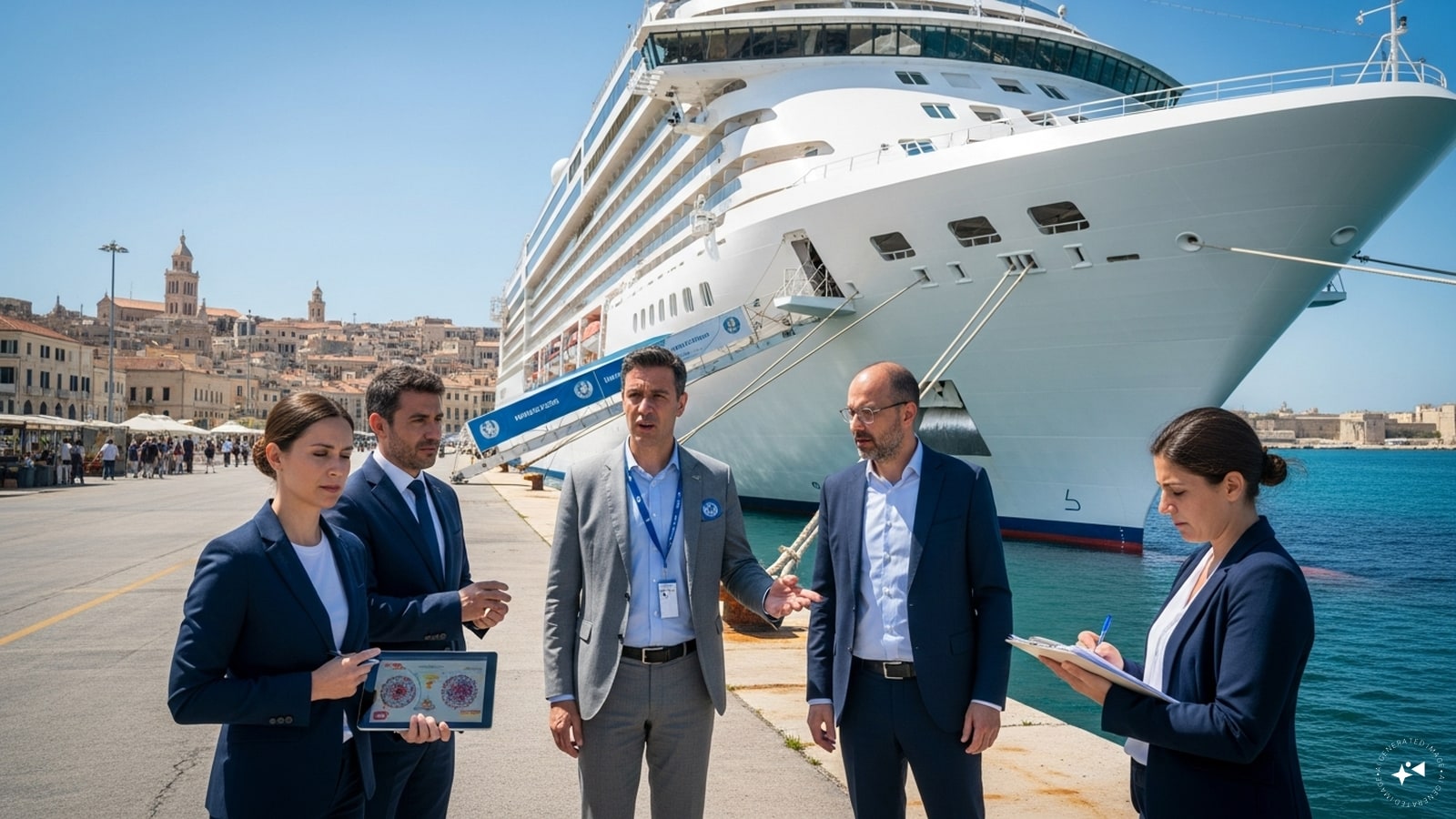
The federal government is currently finalizing a high-stakes extraction of 17 American citizens from a Dutch-flagged vessel currently anchored off the coast of the Canary Islands. These passengers, trapped aboard the M/V Hondius, are at the center of an epidemiological nightmare that has already claimed three lives. While the CDC insists the risk to the general public remains low, the specific logistics of this evacuation reveal a far more precarious reality than the official press releases suggest.
This is not a standard medical repatriation. The pathogen in question is a specific, lethal strain of Hantavirus known as the Andes virus (ANDV). Unlike most Hantavirus variants found in North America, which typically require direct contact with rodent droppings, the Andes strain is one of the only versions confirmed to spread through human-to-human contact. This single biological distinction has transformed a localized cruise ship incident into a complex international containment operation involving the Department of State, the CDC, and the Spanish military.
The Biocontainment Air Bridge
The evacuation plan involves a specialized medical repatriation flight scheduled to land at Offutt Air Force Base in Omaha, Nebraska. From there, the passengers will not be sent to local hospitals or allowed to self-isolate at home. They are being funneled directly into the National Quarantine Center at the University of Nebraska Medical Center.
The decision to use Omaha is telling. This facility houses the most advanced biocontainment units in the United States, designed for pathogens like Ebola. If the government truly viewed this as a routine Hantavirus incident, these Americans would be landing at commercial hubs. Instead, they are being treated as biological "hot" assets.
The logistics on the ground in Spain are equally restrictive. Spanish authorities, led by the regional government of the Canary Islands, flatly refused to let the M/V Hondius dock at the pier in Tenerife. This forced the ship to remain at anchor, essentially creating a floating lazaretto. Passengers will be ferried to shore in groups of five using small, isolated boats. They will then be moved by bus—under heavy guard and in total isolation from the public—directly to the airport tarmac where the U.S. aircraft is waiting. There is no room for error in this "sterile corridor" approach.
Why the Andes Strain Changed the Rules
To understand the intensity of this response, one must look at the timeline of the outbreak. The M/V Hondius departed from southern Argentina in March. By early May, seven cases were confirmed or suspected, resulting in three rapid deaths. The speed of the deterioration is the hallmark of Hantavirus Pulmonary Syndrome (HPS). Victims often present with what looks like a common flu—fever, muscle aches, and fatigue—only to face sudden, catastrophic respiratory failure as their lungs fill with fluid.
The mortality rate for HPS can reach 40%. When you add the variable of human-to-human transmission, the ship becomes a closed-loop incubator. The CDC has officially classified this as a "Level 3" emergency response. While that is not the highest level on their four-point scale, it signals a shift from mere monitoring to active resource mobilization.
There is also a significant intelligence gap that the government is currently racing to close. At least 29 passengers disembarked the ship on April 24, before the full extent of the outbreak was understood. Six of those individuals returned to California, Georgia, and Arizona. While none have yet shown symptoms, the incubation period for the Andes virus can stretch to six weeks. This means the U.S. is not just managing the 17 people currently on the ship; it is quietly tracking a secondary group of travelers already embedded in American communities.
The Diplomatic Friction of Quarantine
The M/V Hondius situation has also exposed a rift in international health coordination. Spain’s refusal to allow the ship to dock was a move of pure political preservation. Fernando Clavijo, the regional president of the Canaries, publicly lobbied the central government to keep the ship at sea to protect the local tourism economy. This created a standoff that delayed medical assessments for days while the ship sat off the coast of Cape Verde.
For the Americans on board, the experience has been one of mounting tension. While some passengers have reported a "calm" atmosphere to the media, the reality of being confined to a cabin while your fellow travelers are medically evacuated to South Africa or perish in their staterooms is a psychological burden that will likely require as much post-extraction care as the virus itself.
The U.S. response is also navigating a new diplomatic reality. Having withdrawn from the World Health Organization (WHO) in early 2025, the American government is now forced to negotiate these repatriations through direct bilateral channels rather than relying on the traditional global health infrastructure. This has made the "whole-of-government" approach touted by the State Department more labor-intensive and legally complex.
Logistics of the Omaha Transition
Upon arrival in Nebraska, each passenger will be assigned a private room in the National Quarantine Unit. This is not a suggestion; it is a federal mandate. Medical teams will be monitoring for "viral shedding," a process where an infected person can spread the pathogen even before they feel ill.
The university’s medical director, Michael Wadman, has confirmed they are prepared for up to 19 arrivals. The protocol includes:
- Continuous physiological monitoring to catch the first signs of pulmonary edema.
- Advanced PCR testing conducted daily to detect the specific ANDV genetic signature.
- Strict isolation where medical staff enter only in full-body pressurized suits.
The objective is to hold these individuals until the 42-day window of incubation expires. If any passenger tests positive during this period, the quarantine for the entire group may be re-evaluated based on their level of contact.
This operation serves as a grim reminder that the era of shipboard "quarantine" did not end with the nineteenth century. As climate variability and land-use changes in South America push human populations and rodent habitats closer together, the emergence of rare strains like the Andes virus is becoming more frequent. The Hondius is a test case for how a modern, mobile society reacts when an old-world plague meets a twenty-first-century cruise itinerary.
The flight is expected to depart Spain within the next 24 hours. Once the wheels leave the tarmac in Tenerife, the clock starts on a six-week vigil in the heart of the American Midwest.