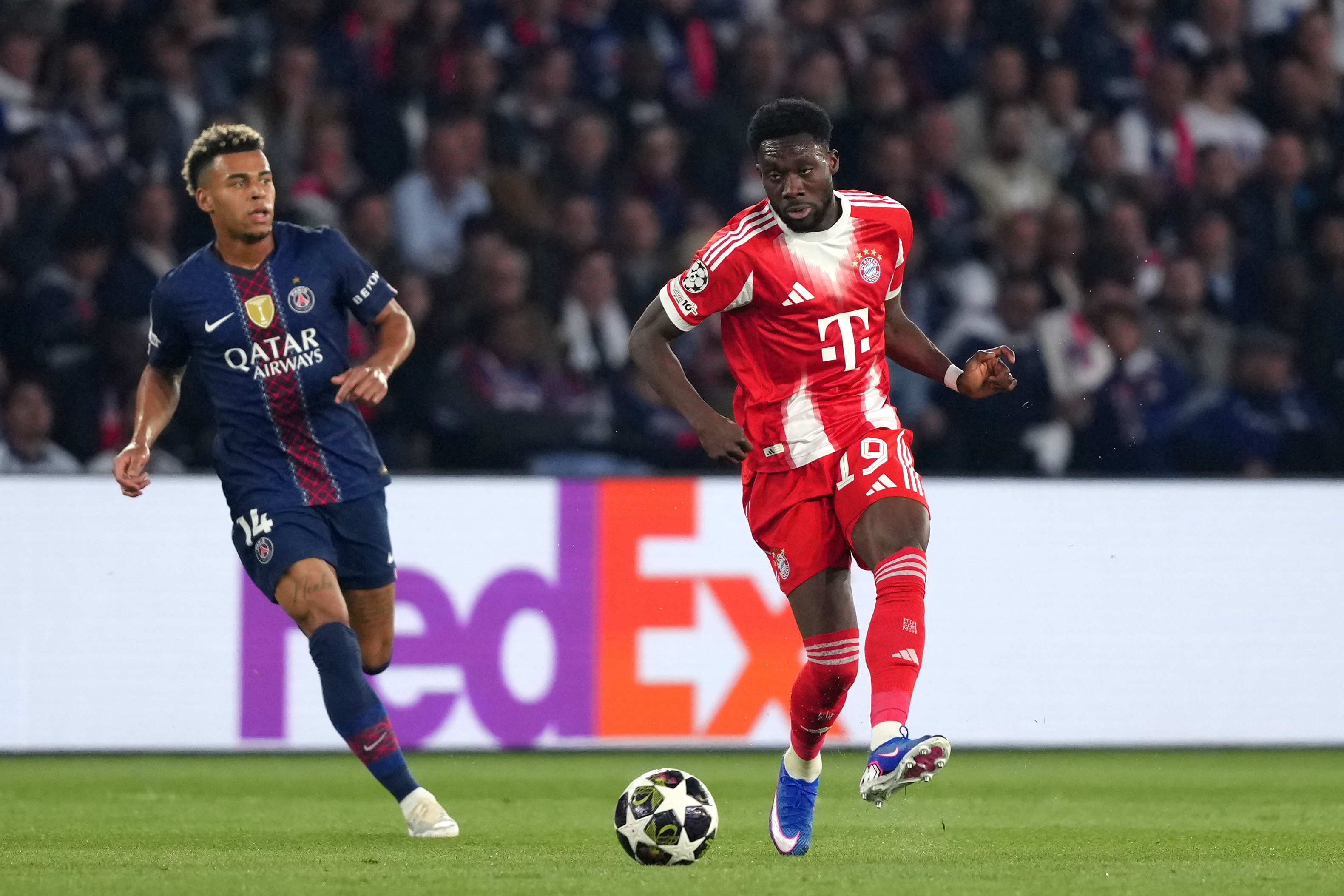
The collective gasp heard across Canadian soccer circles when Alphonso Davies clutched his hamstring isn’t a sign of empathy. It’s a sign of a fundamental misunderstanding of how winning works at the highest level of international football. Every major outlet is currently running the same exhausted narrative: Canada’s World Cup hopes are "dented," the star man is "down," and the sky is falling.
They are wrong.
If you’ve spent any time in the trenches of high-performance scouting or tactical analysis, you know that the "Superstar Dependency Trap" kills more underdog stories than injuries ever do. The narrative of the "tragic blow" is lazy journalism for people who only watch the highlights. Davies being sidelined—or even slightly hampered—is exactly the cold-water shock this squad needs to move from a sentimental Cinderella story to a legitimate tactical threat.
The Myth of the Indispensable Individual
The obsession with Davies’ hamstrings ignores a brutal truth about the modern game. When a team has a generational talent of his caliber, the tactical structure naturally warps toward them. It’s unavoidable. Managers stop looking for the best solution and start looking for the "Get the Ball to Alphonso" solution.
I’ve watched national programs stagnate for a decade because they refused to build a system that survived without their talisman. Look at the historical "Zlatan era" for Sweden or the way Argentina struggled for years to integrate anyone not named Messi into a functional scoring rhythm.
By removing—or even threatening to remove—the Davies safety net, John Herdman is forced to confront the structural weaknesses he’s been able to paper over with Davies' pure, unadulterated speed.
- Predictability: Every analyst in the World Cup group stage knows exactly where the threat is coming from. If Davies is on the pitch, the defensive block shifts. They double-up. They bracket.
- Tactical Laziness: Midfielders stop scanning for the third-man run because they know they can just loft a ball into the left channel and let #19 outrun a fullback.
- The Weight of Expectation: The psychological burden on a 22-year-old to carry an entire nation's debut (in the modern era) is immense.
A hamstring tweak isn't a disaster. It’s a redistribution of responsibility.
The Physiological Reality of the Hamstring
Let’s talk shop about the $Biceps$ $femoris$. The media treats a hamstring "strain" like a binary switch—on or off. It isn't.
Modern sports science, specifically the protocols utilized by clubs like Bayern Munich, doesn't just "rest" players anymore. They utilize localized cryotherapy, blood flow restriction (BFR) training, and precise eccentric loading to maintain muscle architecture while the fibers knit back together.
The panic assumes Davies will return at 50%. In reality, the high-performance staff at Bayern are likely more concerned with his long-term explosive power for the Bundesliga than Canada's three-game sprint. If he’s cleared to play, he’s cleared to fly. If he isn’t, the team finds out who actually belongs on the pitch and who was just hitching a ride on his coattails.
The Mathematics of Depth
Consider the tactical versatility Canada gains by moving away from a Davies-centric 3-4-3 or 4-4-2.
- The Buchanan Factor: Tajon Buchanan thrives when he isn't playing second fiddle. He has the raw 1v1 ability to unbalance a defense, but he often defers to Davies when they share the flank.
- Midfield Density: Without the "Davies Tax" on the left wing, Herdman can opt for a more robust three-man midfield. This protects a backline that, let’s be honest, is the actual Achilles' heel of this roster.
- Jonathan David's True Role: David is one of the most intelligent strikers in Ligue 1. He doesn't need a sprinter to create for him; he needs a system that moves the ball through the half-spaces.
People Also Ask: "Can Canada Win Without Davies?"
This is the wrong question. The right question is: "Can Canada survive a World Cup if they are so fragile that one player’s hamstring determines their fate?"
If the answer is no, they were never going to make it out of the group stage anyway. International tournaments are wars of attrition. You don't win with eleven stars; you win with a cohesive twenty-six-man unit that can absorb shocks.
If you think a single injury dooms a national team, you aren't paying attention to the history of the tournament. The 1962 Brazil squad lost Pelé in the second game. They didn't fold; they adjusted, relied on Amarildo and Garrincha, and won the whole thing. Canada isn't 1962 Brazil, but the principle of the "Next Man Up" remains the only path to glory.
The Insider's Trade-Off
I’ll be the first to admit the downsides. You lose the "fear factor." You lose the ability to turn a defensive corner into a goal in eight seconds flat. You lose a player whose presence alone occupies the minds of two opposing defenders.
But what you gain is unpredictability.
Opposing coaches—Martinez for Belgium, Regragui for Morocco—have folders thick with data on how to neutralize Davies. They have spent months drilling their right-backs on his diagonal inside runs. When you take that away, you set their scouting reports on fire. You force them to adapt to a Canada they haven't seen on tape.
In the high-stakes poker game of a World Cup, being the team no one has a read on is worth more than having one marked ace in your hand.
Stop Coddling the Narrative
The "Poor Alphonso" articles are a disservice to the rest of the roster. Stephen Eustáquio is arguably the most important player for Canada’s tactical stability, yet he doesn't get 10% of the digital ink Davies gets for a muscle twitch. Cyle Larin is the all-time leading scorer, yet he’s treated like a footnote in the "Davies Injury Crisis."
This isn't a tragedy. It’s a pressure test.
If Canada wants to be taken seriously as a footballing nation, they need to stop acting like a one-man fan club and start acting like a tactical collective. This injury removes the distractions. It silences the hype machine and forces the focus back onto the pitch, where it belongs.
The most dangerous version of Canada isn't the one where everyone is watching Alphonso Davies. It’s the one where no one knows who to watch.
Let the media mourn. The real work starts when the "indispensable" man is in the stands. It’s time for the Canadian program to prove it has a pulse that doesn't depend on a single muscle in a single player’s leg.
If they can’t do that, they were never ready for the world stage in the first place.