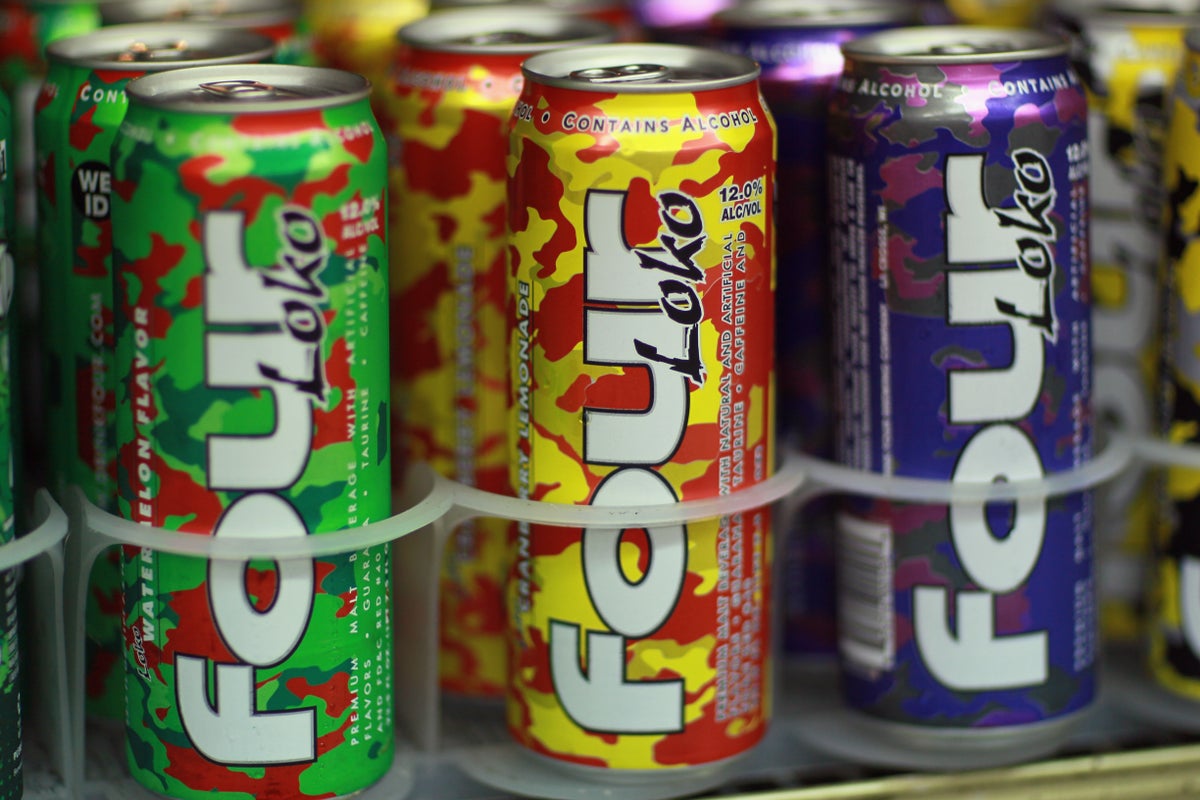
The morning shift for most law enforcement officers involves a briefing, a cup of black coffee, and a review of the overnight blotter. For a sitting sheriff now facing the collapse of his career and a litany of criminal charges, the day began with the crack of a high-gravity malt liquor can. By the time most of his constituents were settling into their desks, the county’s highest-ranking lawman was navigating a state of profound chemical impairment.
Authorities confirm the sheriff was consuming high-alcohol Four Lokos starting at 6 a.m., a detail that transforms a standard DUI arrest into a systemic interrogation of power, stress, and the catastrophic failure of oversight. This was not a social drink that went long. This was a calculated, early-morning immersion in substances specifically designed for rapid intoxication, occurring while the sheriff was technically responsible for the safety of thousands.
The fallout from this arrest extends far beyond the legal penalties of a drunk driving charge. It exposes the hollow reality of "internal affairs" when the person at the top of the pyramid is the one spiraling. When the person who holds the keys to the jail is the one who belongs inside it, the very definition of public safety begins to erode.
The Chemistry of a High Speed Crash
To understand the severity of this incident, one must look at the specific substance involved. Four Loko, often referred to as "blackout in a can," typically carries an alcohol-by-volume (ABV) of 12% to 14%. A single 24-ounce can is the equivalent of drinking four to five standard beers. Starting this regimen at dawn suggests a level of tolerance and dependency that does not develop overnight.
Medical professionals specializing in occupational trauma note that law enforcement culture often masks these symptoms behind a "warrior" persona. The silence is deafening. Colleagues often see the signs—the tremors, the breath mints, the erratic arrival times—but the hierarchical nature of a Sheriff’s Office makes whistleblowing a professional suicide mission.
In this case, the sheriff wasn't just over the limit; he was operating in a different cognitive reality. Driving a department-issued vehicle while under the influence of multiple high-gravity beverages creates a kinetic weapon. The weight of a police cruiser combined with the slowed reaction times of a person who has been drinking for six hours is a recipe for a multi-casualty event.
Why the Badge Often Acts as a Shield
There is a recurring pattern in rural and mid-sized county politics where the Sheriff is treated more like a local king than a public servant. Because they are elected officials, they answer to the voters once every four years, but they often answer to no one on a Tuesday morning. This lack of daily, lateral accountability allows personal crises to fester into public scandals.
Internal investigators are usually subordinates. It is a fundamental flaw in the American policing structure. A deputy who pulls over their own boss faces an impossible choice: uphold the law and face certain retaliation, or look the other way and pray no one dies. In this instance, the arrest was only made possible because the behavior became too public to ignore, or because outside agencies were forced to intervene.
- Political Autonomy: Sheriffs operate with a level of independence that municipal police chiefs do not have.
- The Blue Wall: The culture of protecting one's own is magnified when the person needing protection is the commanding officer.
- Resource Scarcity: Small departments lack the mental health resources and mandatory check-ins required to catch these spirals early.
The "high-alcohol" element of this story is not just a sensationalist detail. It is a marker of desperation. These are not drinks chosen for their flavor or for a celebratory toast. They are chosen for their efficiency. For an official to reach for these at 6 a.m. suggests that the "functioning" part of "functioning alcoholic" had long since departed.
The Administrative Vacuum
When a sheriff is charged, the department doesn't just lose a leader; it loses its legal standing. Every arrest made, every warrant signed, and every testimony given by that official is now subject to intense scrutiny by defense attorneys. This single morning of drinking has the potential to overturn years of legitimate police work.
We are seeing the cost of the "hero" myth. By demanding that our law enforcement officers be invincible, we create an environment where they cannot admit to being broken. Instead of seeking help for the PTSD, the burnout, or the genetic predispositions to addiction, they turn to the bottom shelf of the gas station cooler.
The tragedy isn't just the DUI. The tragedy is the weeks and months leading up to it where the people in that office likely knew their leader was sinking. They watched him walk into the building. They smelled the fruit-flavored malt liquor masked by peppermint. And they said nothing because the system is designed to punish the messenger.
The Road to Reform Requires External Eyes
We cannot continue to let local law enforcement agencies police their own executives. The solution is not more "awareness training" or another round of hand-wringing press releases. The solution is mandatory, third-party oversight for all elected law enforcement officials.
If a sheriff refuses a breathalyzer or shows signs of impairment, the investigation should immediately be handed to a state-level bureau or an adjacent county's prosecutor. Removing the local politics from the equation is the only way to ensure that the badge doesn't become a "get out of jail free" card.
The public trust is a fragile thing. It is shattered when the man who warns your children about the dangers of drunk driving is the same man found slumped over the wheel with a half-empty can of high-gravity malt liquor at sunrise. This isn't just a lapse in judgment. It is a betrayal of the oath.
Check your local county charters for "Recall" or "Removal for Cause" clauses. Understanding how to legally strip a compromised official of their power before they hit the road at 6 a.m. is the most effective way to protect your community.